QR codes are changing that. Specifically, dynamic QR codes are turning every physical surface into a live, updatable, trackable digital gateway — one that can serve different content based on who scans, when, and from where.
This article covers how leading brands across retail, CPG, hospitality, and events are already using QR codes to deliver personalised experiences at scale, and what it takes to run those campaigns effectively.
Key Takeaways
- Dynamic QR codes allow brands to update destination content without reprinting — making real-time personalisation possible at physical touchpoints
- Brands like Coca-Cola, Starbucks, IKEA, and Sephora use QR codes to connect physical products and spaces to tailored digital experiences
- Scan data — location, device, time, and frequency — directly informs smarter, more targeted campaigns
- QR code touchpoints can personalise every stage of the customer journey, from discovery to post-purchase
- QRStuff gives brands the analytics, dynamic redirects, and GDPR/SOC2-compliant infrastructure to run these campaigns responsibly
Why Personalisation and QR Codes Work Together
Personalisation is no longer a differentiator — it's a baseline. According to McKinsey, 71% of consumers expect personalised interactions, and 76% get frustrated when they don't receive them. For brands, getting personalisation right can reduce customer acquisition costs by up to 50% and lift revenues by 5–15%.
Digital channels have had this infrastructure for years. Email platforms segment by behaviour, websites adapt content in real time, and apps surface recommendations based on purchase history. But the physical world has largely been left out.
Personalisation at Physical Touchpoints: The Missing Piece
A can of soda, a hotel room card, a shelf display — these surfaces have always delivered the same message to every person who encounters them, regardless of who they are or why they're there.
QR codes close this gap. When a consumer scans a code on a physical object, that scan is a moment of intent — and if the code is dynamic, the brand can respond to that moment with relevant, contextual content. The physical object becomes a gateway, and the gateway can be personalised.
The commercial case for bridging that gap is substantial. BCG's 2024 retail research frames in-store personalisation as part of a $570 billion growth opportunity for retailers, with Sephora cited for tying 95% of transactions across online and physical locations to loyalty member accounts — a result built on exactly the kind of physical-to-digital connection QR codes make possible.
Static vs. Dynamic QR Codes: Why the Difference Matters
Not all QR codes support personalisation. The distinction is fundamental:
| Static QR Code | Dynamic QR Code | |
|---|---|---|
| Destination | Fixed at creation | Editable at any time |
| Reprinting required to change? | Yes | No |
| Analytics/tracking | None | Full scan data |
| Personalisation potential | None | High |
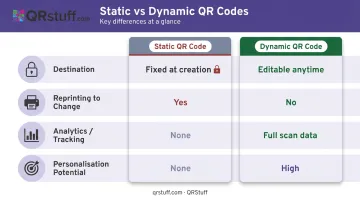
Static codes encode a URL directly into the code's pattern. Change the URL and you need a new code, which means reprinting. Dynamic codes use a redirect layer: the code points to a short URL that routes to wherever you configure it. Change the destination in your dashboard and every existing printed code instantly points somewhere new.
This redirect architecture is what makes personalisation possible. A brand can update a campaign's destination based on phase, season, geography, or audience segment without touching a single label or display. Platforms like QRStuff build scan tracking directly into this layer, so brands know exactly who scanned, when, and from where.
How Brands Are Using QR Codes to Personalise Customer Experiences
Across industries, brands are already running QR-powered personalisation — not as experiments, but as core parts of their customer experience strategy.
Retail: Product Discovery and Loyalty
Sephora placed QR codes in stores and catalogues to give customers access to product tutorial videos and how-to beauty guides. The scan doesn't just take you to a homepage: it surfaces content relevant to the product in front of you, functioning like an on-demand beauty consultation.
Starbucks deployed QR codes across millions of in-store materials to direct customers to the Starbucks app, the gateway to their Rewards programme, personalised drink offers, and member-exclusive games. The QR code itself isn't personalised, but what it unlocks (the loyalty ecosystem) is deeply individual. Every rewards member gets a different experience based on their purchase history and preferences.
Nike's House of Innovation flagship pushes in-store QR codes further: customers can scan codes on mannequins and apparel to check available sizes and colours and request items directly. The scan replaces the need to hunt down a sales associate, meeting the customer exactly where they are in the purchase journey.
Food, Beverage, and Packaging
Coca-Cola's on-pack QR campaigns show what's possible when packaging becomes a dynamic experience layer.
- The Y3000 Zero Sugar campaign (2023) used on-pack QR codes to open the Coca-Cola Creations Hub, where consumers could generate AI-powered futuristic visualisations using the Y3000 AI Cam
- The Share a Coke relaunch (2025), rolled out across more than 120 countries, used on-pack QR codes and the Coca-Cola app as gateways to a digital hub where fans could customise packaging and create personalised videos through Memory Maker
- A 2025 summer campaign used QR codes in ads to give US fans access to a scratch-off sweepstakes
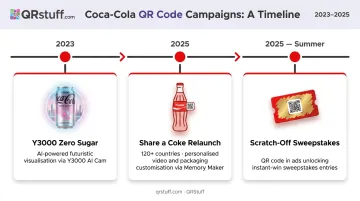
In each case, a physical QR code becomes an entry point to a branded digital world that shifts with each campaign phase. No reprinting required: the destination updates, and the experience stays fresh.
Hospitality: Guest Experience Personalisation
Marriott International, a QRStuff customer, represents a hospitality sector that has adopted QR codes for guest experience delivery. The use case is straightforward: in-room QR codes surface dining options, local guides, concierge services, and property information, replacing static printed materials with a dynamic, always-current experience.
A returning guest's scan, cross-referenced with CRM data, can surface different content than a first-time visitor sees. A business traveller might be routed to express checkout and meeting room booking; a leisure guest to spa availability and local restaurant recommendations.
Hotel Management reports that QR codes help hotels deliver digital menus, room-service ordering, guest information, and loyalty integration, all through a single physical touchpoint.
Events and Campaign-Specific Personalisation
Event marketers use QR codes to route different audience segments to different experiences. VIP attendees scan to a personalised welcome and premium content portal; general admission scans to the standard event programme. A sponsor's booth code might route by geography: UK attendees see local pricing and contact details, US attendees see the North American version.
One printed code, multiple possible destinations — the routing logic lives entirely in the platform, configurable by context rules without touching the physical asset.
Personalising the Full Customer Journey with QR Codes
Personalisation isn't a single moment. It's a thread that runs through the entire brand relationship — and QR codes can serve as personalised touchpoints at every stage.
Pre-Purchase: Informing and Influencing
A first-time shopper encountering your product on a shelf is in a different mindset than a repeat buyer. QR codes on packaging or shelf displays can route new visitors to product explainers, comparison content, reviews, or virtual try-ons.
NYX Professional Makeup (a L'Oréal brand) lets customers scan a QR code to virtually try on products using ModiFace AR technology, simulating more than 16 million colour combinations. That scan bridges the physical retail moment with an interactive digital experience that would otherwise require a store associate or a separate app download.
Geo-targeting adds another layer. Brands can configure QR codes to serve regionally relevant pricing, promotions, or language-appropriate content based on where the scan originates.
In-Store and In-Moment: Deepening Engagement
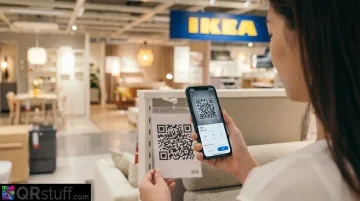
IKEA uses QR codes in-store as part of its Shop and Scan feature. Customers scan at a participating location to activate the IKEA app, which supports personalised deals, stock discovery, and IKEA Kreativ — the room visualisation tool that lets shoppers see furniture in their own space before buying.
That same in-moment logic applies beyond retail. Restaurant QR menus have evolved well past a static PDF link: today they function as a smart routing layer, surfacing daily specials, dietary-filtered menus, or upsell pairings based on context.
Post-Purchase: Building Loyalty Through Ongoing Value
Post-purchase is where QR personalisation often gets overlooked — and where it can have the most impact on retention.
LEGO is a strong example here. Buyers can scan the QR code on building instructions to earn LEGO Insiders loyalty points, or use the LEGO Builder app to access 3D building guides. That post-purchase scan functions as an onboarding moment, not just a transaction — deepening the customer relationship from the point of unboxing.
The same principle scales across product categories:
- First scan → setup guide or quick-start tutorial
- Second scan → advanced tips and use cases
- Third scan → accessories, upgrades, or reorder prompts
Each interaction adds value, and each one reinforces the brand relationship. Dynamic codes make this possible — the destination evolves without the code ever changing.
Turning QR Code Scan Data Into Smarter Personalisation
Turning QR Code Scan Data Into Smarter Personalization
Every scan generates a signal. Across a campaign, those signals build a picture of how customers engage with physical touchpoints that no survey or focus group can replicate.
QRStuff's analytics dashboard captures:
- Total and unique scans — distinguishing new audience reach from repeat engagement
- Geographic data — country and city-level location for every scan
- Device type — iOS vs. Android, mobile vs. desktop
- Scan time and date — identifying peak engagement windows
- Referring source — context on how users discovered the code
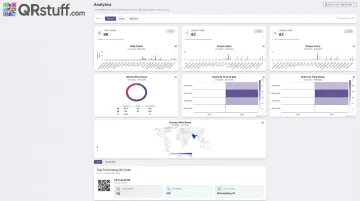
This is first-party data, collected directly at the moment of intent. The scan happens because the customer chose to engage — making it one of the cleaner intent signals available in physical retail.
The business impact is real. Marketing Dive reported that Coca-Cola's Innocent Drinks exceeded its first-party data goals through QR code ads. Meanwhile, PepsiCo grew its first-party data stores by 50% using tactics that included QR codes on product packaging and in-store point-of-sale materials.
Brands can use this data to run structured A/B tests — comparing landing page variants or conversion rates by geography. QRStuff supports UTM parameter appending to destination URLs, so scan-driven conversions appear directly in Google Analytics alongside your other channel data. Each campaign then feeds cleaner audience signals into the next, steadily narrowing the gap between physical engagement and digital conversion.
Best Practices for Running Personalised QR Code Campaigns
Match the destination to the context
A QR code on a loyalty card should land on a loyalty dashboard — not a homepage. A code on a post-purchase insert should surface a setup guide, not a product catalogue. The destination experience needs to match the moment of the scan, or the personalisation promise falls apart.
Mobile optimisation isn't optional here. The vast majority of QR scans happen on smartphones, so every destination page needs to load fast, display cleanly on small screens, and require minimal friction to get to the relevant content.
Build in a feedback loop
Treat every QR campaign as iterative. Use scan data to identify which placements drive the most engagement, which content performs best by region, and when your audience is most likely to scan. From there:
- Test two landing page variants against each other
- Adjust timing based on observed scan patterns
- Swap destination URLs as performance data comes in
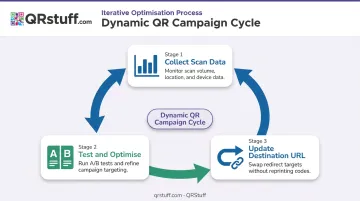
Dynamic codes make all of this possible without reprinting a single piece of collateral.
Handle data collection transparently
Collecting scan data is where campaigns intersect with privacy obligations. When QR codes route users to forms, loyalty signups, or data capture pages, what's collected falls under regulation. The ICO is clear that location data and online identifiers can constitute personal data under UK GDPR, and California's privacy agency applies similar logic under CCPA.
The practical steps:
- Be explicit about what you're collecting and why
- Provide a clear opt-out path at the point of data capture
- Don't collect more than the campaign actually requires
QRStuff is both GDPR and SOC2 compliant, with scan analytics built on anonymised and aggregated data — so brands can use the platform's insights without taking on individual-level data liability.
Frequently Asked Questions
How do QR codes enable personalized marketing experiences?
Dynamic QR codes allow brands to serve different content based on scan context — including location, device type, scan timing, or CRM data. The destination updates in real time from a dashboard, so the printed code never needs to change.
What is the difference between static and dynamic QR codes for personalization?
Static QR codes link to a fixed URL that can't be changed without reprinting. Dynamic QR codes allow the destination to be updated in real time from a dashboard. For any personalization strategy, dynamic codes are required — static codes simply can't support it.
How can brands use QR codes to collect first-party data?
Brands route QR scans to gated content, loyalty signups, or feedback forms — collecting user data directly and with consent at the moment of highest engagement. This opt-in context typically yields higher-quality data than passive collection methods.
Can QR codes be customised for different customer segments?
A single code typically routes all scanners to the same URL, but brands can use conditional redirect logic or deploy unique codes per channel, location, or segment to serve different audiences different experiences. QRStuff's platform supports multi-URL configurations for this purpose.
What industries benefit most from personalized QR code campaigns?
Retail, hospitality, food and beverage, CPG, and events are the primary sectors — but any industry with physical customer touchpoints can apply QR personalization. If you have a physical surface and customers nearby, the infrastructure is already in place.
How do I measure the success of a personalized QR code campaign?
Track scan volume, unique vs. repeat scans, geographic and device data, and downstream conversion metrics via UTM parameters in Google Analytics. QRStuff's dashboard surfaces these metrics in real time, with CSV export for deeper analysis in your reporting stack.