Yet most marketing teams still use QR codes as glorified hyperlinks: slap a code on a flyer, point it at a homepage, and call it a campaign. The result is low scan rates, no useful data, and a missed opportunity to create genuine engagement.
This guide covers the strategies that actually work — from shoppable campaigns and gamified TV ads to product packaging and lead generation — along with placement best practices, design requirements, and how to measure what's performing.
Key Takeaways
- QR codes bridge physical and digital touchpoints with a single scan — 89M US smartphone users engaged with them in 2022
- Top strategies include shoppable campaigns, product packaging, gamification, app downloads, and lead generation
- Placement context and CTA copy matter as much as the code itself
- Dynamic QR codes let you update destinations without reprinting — no need to reprint materials mid-campaign
- Track scan volume, unique scans, location, device type, and time patterns to optimize campaign performance
What Is QR Code Advertising and Why Does It Work?
QR code advertising is the strategic placement of scannable codes within marketing materials — print, digital, video, packaging, or out-of-home — to direct audiences toward a specific action. The key word is strategic. Each placement should be designed around a defined goal: awareness, conversion, engagement, or data collection — not added as an afterthought.
The psychology is straightforward. Every additional step between a consumer and an action creates drop-off. Searching for a brand, typing a URL, navigating a homepage — each one bleeds momentum. A QR code collapses that sequence into one gesture. The moment someone is holding their phone and curious, you have their full attention.
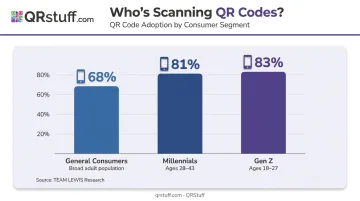
That attention translates into action at scale. Research from TEAM LEWIS found that 68% of consumers used a QR code at least once in the past year, rising to 83% among Gen Z and 81% among Millennials. For brands targeting younger demographics, QR codes aren't a supplementary channel — they're expected.
What separates QR code advertising from casual use is intentional campaign infrastructure: a specific CTA, a mobile-optimized destination, tracking enabled from day one, and a clear connection to a funnel stage.
Top QR Code Advertising Strategies
The most effective QR campaigns align the code's destination and CTA with where the audience sits in the funnel — awareness, consideration, or conversion. Here are the six strategies worth building into your advertising mix.
Bridge Print and Out-of-Home Advertising with Digital
Print and out-of-home advertising have always had a measurement problem. A billboard generates impressions, not actions. A direct mail flyer lands on a desk with no way to track whether it prompted a visit.
QR codes close that gap. A static print asset — billboard, window poster, event banner, magazine ad — becomes an interactive touchpoint the moment a code is added with a clear incentive.
Practical sizing for large-format placements: The widely used industry guideline is a 10:1 distance-to-size ratio — for every 10 feet of expected scan distance, the QR code should be 1 foot wide. A billboard viewed from 30 feet away needs a code at least 3 feet across.
For direct mail, the results speak to the format's effectiveness. A Nellymoser report cited by Shutterfly Business Solutions found mail pieces with QR codes achieved a 6.4% response rate, versus 4.4% without. Adding a QR code to a flyer that links to an exclusive online discount — rather than a generic homepage — is one of the simplest ways to improve response rates without reprinting existing materials.
Create Shoppable and Promotional QR Campaigns
Shoppable QR codes are among the highest-converting formats in advertising. Linking a code directly to a product page, checkout screen, or promotional activation takes a passive viewer and creates a buying opportunity in seconds.
The most famous example: Coinbase's bouncing QR code at Super Bowl LVI generated over 20 million website hits in one minute and pushed the app from 186th to 2nd on the US App Store. The ad worked because the destination was immediate, the incentive was clear, and scanning required no friction whatsoever.
For promotional campaigns — limited-time offers, coupon codes, giveaways — the real operational advantage is dynamic QR codes. On QRStuff, dynamic codes (available on Lite, Full, and Enterprise plans) let you update the destination URL without touching the printed material. Run a different offer each week using the same code on the same signage. When the campaign ends, redirect to a new landing page rather than a dead link.
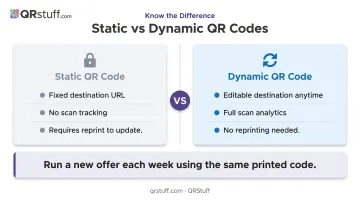
That keeps campaign materials working longer — and your budget intact.
Enhance Product Packaging with QR Codes
Product packaging is one of the most underused QR code placements in marketing. The consumer is already holding the product, already engaged — and there's a code sitting right there.
Packaging QR codes can link to:
- Ingredient and allergen details
- How-to videos and usage guides
- Brand sustainability information
- Loyalty program sign-ups
- Customer reviews and ratings
- Recipe suggestions or product pairings
Bitly reports that 61% of shoppers have scanned a QR code on a product after purchase, citing the 2024 World Sync Consumer Product Content Benchmark. That's a significant post-purchase engagement window most brands leave unaddressed.
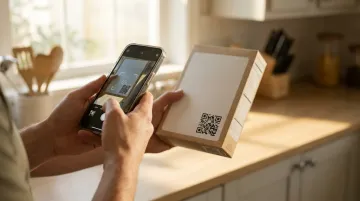
QRStuff supports GS1 Digital Link QR codes for packaging — a format that carries GTIN, batch, and expiry data while simultaneously linking to consumer-facing product pages. It's particularly relevant for food and beverage, pharmaceutical, and retail brands that need to satisfy both operational scanning requirements and consumer content delivery from a single code.
Every packaging scan also generates trackable data: which SKUs drive the most engagement, which regions are scanning, what time of day. That feeds back into targeting and retargeting campaigns.
Gamify the QR Code Scanning Experience
Gamification makes scanning the point — not just the means. Hide a QR code as a visual Easter egg, pair it with a curiosity-driven prompt, and reward whoever finds it.
Burger King's QR Whopper campaign (verified by Marketing Dive) put a floating QR code in a TV spot and gave away 10,000 free Whoppers to viewers who scanned during the ad. The mechanics were simple: find the code, unlock the reward. The result was high voluntary engagement from viewers who were actively hunting for the code rather than passively watching.
This approach works particularly well in CTV and streaming video, where the second-screen behaviour is already established. According to AdExchanger/KERV, 76% of consumers would scan a QR code in a relevant TV ad, and adding one increases attention by 12%. Gamification amplifies that further by creating urgency — the code is only there for a few seconds, or the offer is limited.
Drive App Downloads and Lead Generation
Manual app store searches create drop-off at every step: open the store, type the name, find the right app, tap install. A QR code that routes directly to the correct app store listing — automatically detecting iOS or Android — removes every one of those friction points.
QRStuff's App Store QR code type handles the device detection automatically, directing each scanner to the appropriate store without requiring separate codes for different platforms.
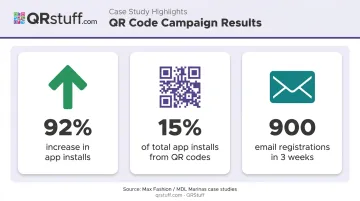
Max Fashion used dynamic QR codes and saw a 92% increase in app installs, with QR codes contributing 15% of total app installs and a 10% reduction in customer acquisition costs, according to a Branch case study.
The same logic applies to lead generation. A QR code on packaging, signage, or printed materials that links to an email sign-up form or free trial page turns a physical touchpoint into a pipeline entry. MDL Marinas captured 900 customer email registrations in three weeks using a QR code-led campaign.
The CTA matters more than most teams realize. "Scan to get your free month" converts far better than "Scan to learn more."
Integrate QR Codes into Email and Social Media
QR codes extend naturally into digital channels. An email signature or newsletter with a QR code gives recipients a faster path to a product page, booking link, or social profile. On social media, a code in a cover photo or story can direct followers to an event RSVP, an app download, or an exclusive landing page.
QRStuff supports dedicated QR code types for 15 social platforms, including Facebook, Instagram, TikTok, LinkedIn, YouTube, WhatsApp, and Spotify — plus a multi-platform Social Links option that consolidates all profiles into a single scannable hub.
The reverse direction is equally valuable: placing QR codes on digital ads or social posts that send audiences to a physical location — a store finder, event map, or in-person RSVP — closes the online-to-offline loop. For brands running omnichannel campaigns, this completes attribution across channels that typically don't talk to each other.
QR Code Advertising Best Practices
Even a well-planned campaign falls apart when codes fail to scan or CTAs give audiences no reason to act. These fundamentals prevent both problems.
Design and Technical Requirements
- Keep contrast high: Dark code on a light background. Avoid reversing colors — many scanners struggle with light codes on dark backgrounds
- Minimum print size: At least 2cm x 2cm (approximately 0.8 x 0.8 inches) for close-range print; larger for signage using the 10:1 distance rule
- Quiet zone: Maintain the white border surrounding the code — cropping it breaks scannability, as the scanner needs that margin to locate the code boundary
- File format: Use SVG or EPS for large-format prints to prevent pixelation; PNG at 300 DPI minimum for digital assets
- Test before deploying: Check on multiple devices and operating systems before any material goes live
CTA Copy
Generic CTAs kill scan rates. "Scan here" or "Learn more" give audiences no reason to act. An effective CTA should:
- Be under six words
- State the specific benefit ("Scan to save 20% today")
- Create urgency or curiosity ("Scan to unlock your reward")
The CTA should appear directly adjacent to the code — not buried in a footer or on the opposite side of the page.
Placement Context
Getting the CTA right is only half the equation — placement determines whether anyone scans at all. A code only works when the audience has time and connectivity. Avoid:
- Moving vehicles (buses, taxis) where dwell time is near zero
- Screens too far away to photograph accurately
- Low-light environments
- Surfaces with glare or distortion (curved packaging edges, reflective materials)
Prioritize placements where the audience is stationary and intentionally engaged: storefronts, packaging, event materials, restaurant tables, printed ads.
Measuring and Optimising QR Code Campaign Performance
Scan counts alone tell you very little. The metrics that actually drive optimisation decisions are:
| Metric | What It Tells You |
|---|---|
| Total scans | Overall campaign reach |
| Unique scans | Distinct individuals reached (vs. repeat scanners) |
| Geographic data | Which regions or cities are engaging |
| Device type | iOS vs. Android split, influences landing page design |
| Time-of-day patterns | Peak engagement windows for timing future campaigns |
| Post-scan conversion | Whether scans are completing the desired action |
QRStuff's analytics dashboard tracks all of these in real time — covering scan volume, unique scans, city and country-level location data, device and OS breakdown, and time/date of each scan event. Export results as CSV or PDF in table or graph format.
Optimising Live Campaigns
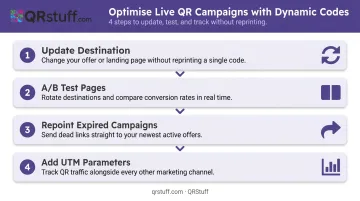
Dynamic QR codes make mid-campaign optimisation possible without reprinting. Practical applications:
- Update the destination when an offer changes or a landing page underperforms
- A/B test landing pages by rotating destinations and comparing scan-to-conversion rates across periods
- Repoint expired campaigns to a new offer rather than leaving a dead link in the field
- Use UTM-tagged URLs as dynamic destinations to track QR-sourced traffic alongside other channels in your analytics platform
Always align QR scan data with actual business outcomes. Scan counts measure reach — app installs, coupon redemptions, form completions, and purchases measure results. Tracking only scans is like tracking only ad impressions: it confirms the campaign ran, not whether it worked.
Conclusion
QR code advertising works across every channel — print, out-of-home, packaging, video, email, and social — when it's built around a specific goal, a benefit-driven CTA, and a mobile-ready destination. The strategies covered here range from straightforward (packaging, direct mail) to more sophisticated (gamified TV spots, shoppable video), which means there's a viable starting point regardless of budget or campaign scale.
The brands generating the best results treat QR codes as measurable campaign assets — dynamic QR codes that can be updated, tracked, tested, and improved while they're live in the market, not static links left to run unchecked.
If you're ready to build campaigns that give you that level of control, explore QRStuff's dynamic QR code platform — create trackable, customizable codes for your next advertising campaign and see exactly what's driving results.
Frequently Asked Questions
How do you advertise your QR code?
Place your QR code in high-visibility, high-traffic contexts — print ads, packaging, signage, digital content — alongside a benefit-specific CTA that gives audiences a clear reason to scan. Make sure the destination is mobile-optimized and that the code is large enough to scan comfortably at the expected viewing distance.
Do QR codes work in advertising?
Yes. With 89 million US smartphone users scanning QR codes in 2022 — up 26% since 2020 — consumer adoption is well established. Effectiveness comes down to three factors: strategic placement, a compelling CTA, and a relevant, mobile-optimized landing page.
What is the best size for a QR code in advertising materials?
For close-range print, aim for at least 0.8 x 0.8 inches (roughly 2cm x 2cm). For large-format placements like banners or billboards, apply the 10:1 rule — the code should be 1 unit wide for every 10 units of expected scan distance. Always test on multiple devices before final deployment.
Should I use a static or dynamic QR code for marketing campaigns?
Static codes have a fixed destination and can't be tracked. Dynamic codes let you update the destination URL after printing and provide full scan analytics — no reprinting required when offers change. For any ongoing or performance-driven campaign, dynamic codes are the better choice. QRStuff's paid plans include dynamic codes with no expiration, so your campaigns stay live without interruption.
What makes a good call to action for a QR code advertisement?
Keep it under six words and make the benefit explicit. "Scan to save 20% today" or "Scan to watch the demo" outperform generic prompts like "Scan here" or "Learn more" because the audience knows exactly what they're getting before they act. Urgency or curiosity-driven language improves scan rates further.