QR codes have become the practical mechanism making this possible. According to eMarketer, 38% of people in the U.S. scan QR codes at least once per year — over 100 million people willing to scan, a number that keeps climbing. Meanwhile, Juniper Research projected global QR payment spend would exceed $3 trillion by 2025, up from $2.4 trillion in 2022.
This article covers how QR codes are reshaping every stage of the shopping journey — from product discovery and checkout to post-purchase loyalty — and how to deploy them effectively.
Key Takeaways
- QR codes bridge physical and digital shopping, connecting in-store moments directly to online actions
- Retailers deploy them across the full journey: discovery, checkout, loyalty, returns, and feedback
- Dynamic QR codes let brands update destinations without reprinting, making them ideal for packaging and long-run signage
- Scan analytics reveal shopper behavior by location, device, and time of day
- Success depends on clear calls to action, mobile-optimised landing pages, and strategic placement
How QR Codes Are Transforming Retail and E-Commerce
The Phygital Shift Is Already Here
"Phygital" retail (the merging of physical and digital experiences) isn't a future concept. It's already the default. IBM and NRF research found that 72% of consumers rely on physical stores as all or part of their primary buying method, while 27% use hybrid shopping as their primary approach. Among Gen Z, that hybrid figure rises to 36%.
Shoppers expect both. They want in-store experience paired with online convenience — and QR codes are the bridge that makes this practical.
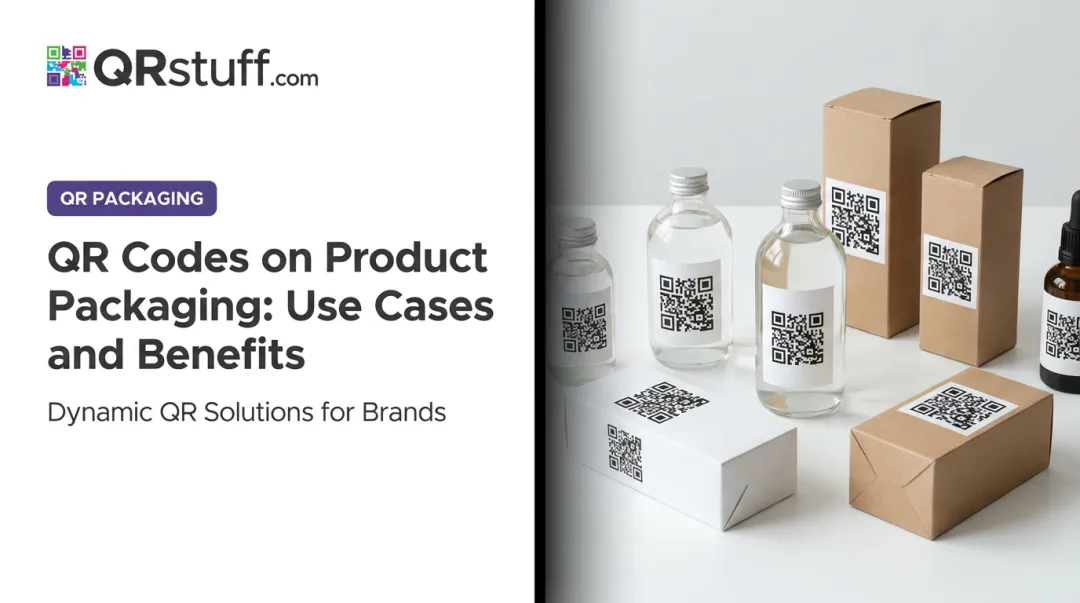
Every passive physical touchpoint (a product label, a receipt, a storefront window) becomes an active digital gateway the moment a QR code is added. Packaging no longer just describes a product — it links to ingredient sourcing, customer reviews, how-to videos, and instant purchase options.
Contactless and Mobile-First Commerce
The behavioral shift toward mobile-first interactions made QR codes more practical than ever. Visa's research found that 41% of consumers abandoned a physical-store purchase because digital payment options weren't accepted. For retailers, that's not a UX problem — it's a direct revenue leak.
QR codes address this directly. They support mobile wallet payments, instant loyalty enrollment, and self-service checkout without requiring shoppers to handle cash or cards.
Friction Reduction Drives Conversion
Every extra step in the purchase process costs you customers. The Baymard Institute puts average e-commerce cart abandonment at 70.19%, with improved checkout UX potentially delivering a 35% increase in conversion rates.
QR codes remove friction at exactly the moments it matters most:
- Instant access to product information without asking staff
- One-scan checkout via mobile wallet
- Immediate loyalty enrollment without downloading an app
- Fast returns processing via email QR codes
Measurable Engagement With Physical Materials
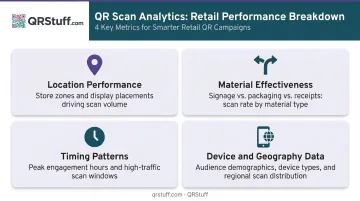
Traditional in-store signage and print materials offered no feedback loop. You placed them and hoped they worked. QR codes change this entirely — every scan is a data point.
That real-time visibility lets retailers act on what's actually working, not what they assume is working:
- Location performance: See which store zones or displays drive the most scans
- Material effectiveness: Compare signage, packaging, and receipts side by side
- Timing patterns: Identify peak engagement hours to time promotions better
- Device and geography data: Understand who's scanning and from where
Key QR Code Use Cases Across the Shopping Journey
QR codes serve shoppers and retailers at every stage. The most effective deployments are purposeful — each code leads somewhere genuinely useful, not just a homepage.
Product Information and Transparency
Shoppers research before they buy. QR codes on packaging or shelf labels connect them directly to:
- Detailed ingredient or material sourcing
- Certifications and sustainability credentials
- Care instructions and how-to videos
- Customer reviews and ratings
The SmartLabel initiative — deployed across 1,000 brands and over 100,000 products — is the clearest proof of this at scale. Patagonia uses QR codes on hang tags to communicate sustainability information directly to shoppers. The Consumer Brands Association and The Recycling Partnership have integrated localized recycling guidance into SmartLabel, so consumers can scan a package and instantly find recycling options for their specific zip code.
This transparency converts. 90% of consumers consider customer ratings and reviews when making a purchase decision, and products with 5,000+ reviews see a 292.6% lift in conversion — QR codes accelerate access to exactly this content.
Contactless Payments and Checkout
QR payment codes at checkout counters, on bills, or at pop-up event stands let shoppers pay via PayPal, Apple Pay, Google Pay, or other mobile wallets without touching cards or cash.
Other payment formats that work well in retail:
- Invoice QR codes — clients pay instantly without logging into a portal
- Pop-up and event payments — portable payment codes that require no terminal
- Self-checkout assistance — reduces staff dependency at each register
QRStuff supports multiple payment platforms including PayPal, Venmo, and Zelle Pay, making it straightforward to generate payment codes that work within existing retail workflows.
Loyalty Programs and Exclusive Offers
Complex loyalty enrollment is a conversion killer. QR codes replace multi-step app navigation or form-filling with a single scan — shoppers are in the programme before they leave the store.
McKinsey found that members of paid loyalty programs are 60% more likely to spend more on the brand after subscribing, and 43% more likely to buy weekly.
QR coupon codes on packaging, receipts, or shelf signage add an immediacy that email campaigns can't replicate. Coca-Cola's Fanta campaign in Canada uses on-pack QR codes to deliver weekly game rewards and prizes — a simple mechanic that drives repeat engagement directly from the product itself.
Feedback Collection and Social Proof
Post-purchase feedback is most useful when it's collected in the moment. QR codes on receipts, packaging inserts, or at the counter make this frictionless — reducing the steps between experience and review submission.
In-the-moment feedback tends to be more specific and actionable than responses gathered days later via email. Social media engagement codes on packaging — linking to UGC submission pages or brand profiles — convert satisfied customers into content creators, generating social proof that influences future buyers.
Post-Purchase Experience
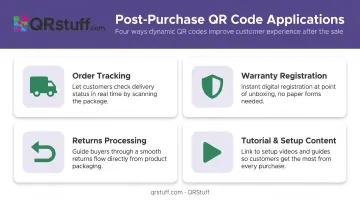
The post-purchase phase is where loyalty is actually won or lost, yet it's often the most under-served part of the journey. QR codes deployed here can cover:
- Order tracking — scan to check delivery status without calling support
- Warranty registration — instant, frictionless enrollment
- Returns processing — QR codes sent via email that customers present at the counter, removing the need for printed receipts
- Tutorial and setup content — product-specific video guides accessible immediately after unboxing
Directing customers to self-service resources via QR reduces inbound support volume, freeing your team for higher-value interactions.
How QR Code Analytics Help Retailers Make Smarter Decisions
Traditional in-store marketing was largely unmeasurable. A poster went up; you had no idea if anyone engaged with it. QR codes change this entirely.
What Scan Analytics Actually Reveal
A proper QR analytics platform gives you:
- Total vs. unique scans — distinguishing overall reach from distinct individuals
- Geographic data — scan locations at country and city level, revealing which stores or regions are most engaged
- Device breakdowns — operating system (iOS vs. Android) and device type, informing landing page design
- Time-of-day patterns — identifying peak engagement windows for future campaign timing
- Placement performance — which materials (packaging, shelf label, receipt) drive the most interactions
QRStuff's analytics dashboard surfaces all of this in real time, making it straightforward to compare campaign periods, justify investment, and refine placement strategy.
From Convenience Feature to Strategic Intelligence
The gap between QR code adoption and commercial impact is real. Chain Store Age reported that 75% of consumers use QR codes to get more information, but only 12% of marketers connect scans to revenue. Analytics closes that gap.
With scan data, retailers can pinpoint:
- Which products generate the most consumer curiosity
- Whether a specific store location is underperforming relative to its traffic
- Whether packaging codes outperform receipt codes for campaign engagement
Decisions that once required expensive customer research are now visible in a dashboard.
Best Practices for QR Code Success in Retail and E-Commerce
Placement, Design, and Scannability
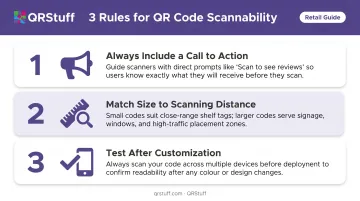
Three rules that determine whether a QR code gets scanned or ignored:
- Always include a call to action. "Scan to see reviews," "Scan to pay," "Scan to earn points" — shoppers won't engage with a code that offers no explanation. Place the instruction directly beside the code, not hidden in fine print.
- Match size to scanning distance. A code too small to scan from a natural viewing distance is a wasted touchpoint. Shelf labels, receipts, and signage each have different distance requirements — design accordingly.
- Test after customization. Adding logos, brand colors, or patterns can reduce readability if error correction isn't handled properly. A 2023 retail field study found that 6.5% of observed QR codes in major US retailers were broken or misdirected. Test every code before deployment.
Mobile-Optimised Destinations Are Non-Negotiable
Shoppers scan with phones. A scan that leads to a desktop-optimised page — or worse, a slow one — negates everything. Deloitte and Google found that a 0.1-second improvement in mobile site speed increases retail conversion rates by 8.4% and average order value by 9.2%. The landing page experience is as important as the code itself.
Choose Dynamic Over Static for Retail Deployments
For any material printed in volume — packaging, shelf labels, receipts, seasonal signage — dynamic QR codes are the practical default. They allow destination URLs to be updated without reprinting, meaning a seasonal campaign, a rotated product page, or a corrected link can be changed instantly.
That flexibility extends to analytics. With QRStuff's dynamic codes, scan tracking is tied to the code itself — not the destination — so historical data is preserved even after a URL change. For retail chains deploying across hundreds of SKUs or locations, the Full Suite plan covers up to 250 dynamic codes with unlimited monthly scans. The Enterprise plan scales to 1,000+ codes with bulk generation and API access for programmatic, SKU-level deployments.
Frequently Asked Questions
How do QR codes help increase sales in retail stores?
QR codes reduce friction at key decision points — giving shoppers instant access to product information, reviews, and offers before they walk away. Loyalty and coupon codes also incentivize repeat visits, converting one-time buyers into regular customers.
What is the difference between static and dynamic QR codes for e-commerce?
Static QR codes encode the destination permanently and cannot be changed after printing. Dynamic codes use a redirect so the destination can be updated at any time. That flexibility makes dynamic codes the better choice for retail, where promotions, product pages, and seasonal offers change regularly.
Where should retailers place QR codes for maximum effectiveness?
Highest-impact placements include product packaging, shelf labels, checkout counters, receipts, and storefront windows. Match placement to intent: payment codes at checkout, review codes on receipts, transparency and product information codes on packaging.
Can QR codes work for small retail businesses, not just large brands?
QR codes are accessible for businesses of any size. Small retailers can use them for payments, loyalty sign-ups, and feedback collection without significant technical investment. Platforms like QRStuff offer free tiers and low-cost plans suited to early-stage deployments.
How do you track the performance of QR codes in a retail campaign?
Dynamic QR code platforms provide scan analytics covering total and unique scans, geographic location, device type, and time-of-day breakdowns. This data lets retailers assess which placements perform, refine campaigns, and report ROI without reprinting a single code.
Are QR codes safe for customers to scan in retail environments?
QR codes from reputable platforms are safe, though the FTC does advise shoppers to inspect URLs before proceeding. Retailers can strengthen trust by choosing platforms that offer HTTPS destination links, password protection, and GDPR and SOC2 compliance — all of which QRStuff supports.