According to McKinsey's 2025 State of Beauty report, the global beauty industry is worth approximately $450 billion and grew at 7% annually from 2022 to 2024. In a market this competitive, brands need every advantage to capture attention at shelf and hold it post-purchase. QR codes on packaging have become one of the most cost-effective ways to do exactly that.
This article covers three things: how QR codes help beauty brands engage customers, what role they play in compliance, and how to design and deploy them effectively.
Key Takeaways
- QR codes turn static cosmetics packaging into a direct, interactive channel between product and buyer
- One scan can serve ingredient disclosures, tutorials, and loyalty enrollments — no extra label space needed
- Dynamic QR codes let brands update destination URLs post-print — no reprinting needed when campaigns change or regulations update
- Placement, branded design, and a specific call-to-action determine whether shoppers scan or scroll past
- Scan analytics show exactly which SKUs and markets are driving engagement
Why QR Codes Belong on Cosmetics Packaging Today
The Packaging Space Problem
Every millimeter of cosmetics packaging is contested territory. Ingredient lists, recycling symbols, allergen warnings, regulatory text, usage instructions, shade names, and brand messaging — all competing for the same finite surface.
A QR code solves this by acting as an expandable digital layer — the physical label stays clean while the information behind the scan is effectively unlimited.
This matters more now than it did five years ago. Research from Mintel found that 45% of US beauty consumers prefer mobile devices over sales associates for in-store product assistance. Shoppers are already reaching for their phones in the aisle — a QR code simply gives them something useful to scan.
Connected Packaging and the Static vs. Dynamic Distinction
QR codes shift packaging from passive to interactive. A jar of moisturiser becomes a two-way communication channel the brand can update, personalise, and measure long after printing.
That last point depends on choosing the right code type:
- Static QR codes encode a fixed URL directly — once printed, the destination cannot be changed and scans go untracked
- Dynamic QR codes use a short redirect URL, so the destination updates any time without reprinting, and every scan is tracked
For cosmetics packaging, dynamic codes are the only practical choice. Campaigns change seasonally, regulations shift by market, and formulations get updated — with a static code, any of these changes means reprinting. With a dynamic code, it's a dashboard update.
Industry Adoption Is Accelerating
QR codes are already moving from differentiator to category standard among leading beauty brands:
- L'Oréal uses on-pack QR codes on La Roche-Posay Lipikar AP+M packaging, linking to full ingredient lists, sourcing details, manufacturing facility information, and quality controls
- ISDIN places serialised QR codes on product packaging through its Love ISDIN loyalty programme — each code can be used once per unit, rewarding authentic purchases
- Shiseido's Ulé was among the first beauty brands to pilot Digital Product Passports, according to reporting from Glossy
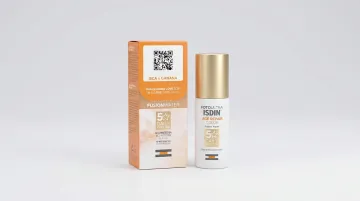
The GS1 Sunrise 2027 initiative — a global retail transition from 1D UPC barcodes to 2D formats including QR codes — signals broader structural change. Brands adopting QR codes now are building infrastructure that will be required across retail by 2027.
What to Put Behind the Scan: Content That Engages and Converts
The QR code itself is just a door. What's on the other side matters more. It needs to solve a real shopper problem, not redirect to a generic homepage.
Ingredient Transparency and Product Education
Ingredient transparency is the highest-value use case for clean beauty brands. Physical labels cannot carry the full story of a hyaluronic acid molecule — whether it's plant-derived, how it's processed, where the facility is located. A mobile landing page can.
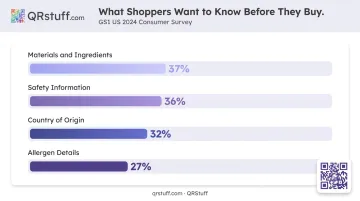
According to GS1 US's 2024 Consumer Pulse Survey, consumers most want materials and ingredient information (37%), safety information (36%), country of origin (32%), and allergen details (27%) from product data — all categories that QR codes can deliver comprehensively.
High-performing content types behind a cosmetics QR scan:
- Full ingredient breakdowns with sourcing and sustainability credentials
- Allergen flags and dermatologist notes
- Video application tutorials and skincare routine guides
- Complementary product recommendations
- User-generated content and reviews
Tutorial content is particularly effective at reducing purchase hesitation and return rates — shoppers who understand how to use a product before buying are far more likely to be satisfied after.
Virtual Try-Ons and Personalization Tools
The shade-matching problem is real. Consumers hesitate to buy foundations or lipsticks online or in unfamiliar stores because they can't test them. A QR code on the packaging can bridge this gap by linking to AR virtual try-on experiences or AI-powered shade finders.
L'Oréal's ModiFace platform now powers virtual try-on across more than 200 websites in over 70 countries, confirming that AR beauty tools are mainstream. Clinique's ClinicalReality AI skin analysis and Charlotte Tilbury's virtual avatar experience show how QR-enabled digital experiences can replace the in-store tester entirely.
Common personalization tools worth linking from a QR scan:
- Skin diagnostics questionnaires and routine builders
- AI-powered shade finders and ingredient match tools
- Live chat with beauty advisors
- Personalized product recommendation engines
Each of these tools makes shoppers feel understood while increasing time-on-site — two factors that directly drive conversion rates.
Loyalty Programmes and Post-Purchase Engagement
A QR code on a product insert or outer carton can enrol a customer in a loyalty programme with a single scan — no app download, no manual form. KIKO Milano uses QR codes so loyalty members can present a personal code in-store, streamlining the rewards experience at the point of purchase.
Post-purchase is where QR codes are often underused. Consider what a code on the product itself can deliver after the sale:
- Refill reminders and subscription prompts
- Recycling and disposal instructions
- Complementary product suggestions
- Satisfaction surveys
- Exclusive member content or early access to launches
Each of these touchpoints extends the brand relationship well beyond the initial transaction, turning one-time buyers into repeat customers without incremental media spend.
How QR Codes Help Beauty Brands Stay Compliant
The Regulatory Landscape Is Getting More Complex
Cosmetics compliance isn't static — and it's getting more demanding on both sides of the Atlantic. Key obligations now include:
- EU Cosmetics Regulation (EC 1223/2009): ingredient lists, allergen disclosures, responsible persons, and period-after-opening indicators
- US FDA MoCRA: facility registration, product listing, and safety substantiation requirements
- Cross-market packaging: separate label content per region, often requiring multiple SKUs
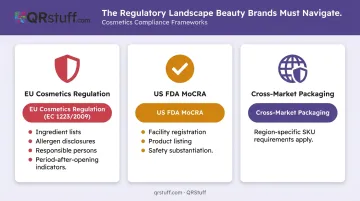
QR codes solve the localization problem that static labels cannot. A single code on shared global packaging can serve country-specific content — local-language ingredient lists, market-specific allergen disclosures, regional disposal instructions — without multiplying packaging SKUs per market.
The Digital Product Passport
The EU's Ecodesign for Sustainable Products Regulation (2024/1781) establishes a Digital Product Passport (DPP) framework — a structured, scannable record containing product data including ingredients, sourcing, environmental impact, and disposal guidance. The European Commission launched a consultation on DPP service-provider rules in April 2025, confirming active development.
No cosmetics-specific QR mandate is confirmed as of mid-2026, but QR codes are the clearest practical path to product-level DPP compliance. Shiseido's Ulé is already piloting DPP-linked QR approaches — a signal that forward-looking brands aren't waiting for the final rules.
That same infrastructure supporting DPP compliance also powers the next evolution in retail barcodes.
GS1 Digital Link: One Code for Everything
The GS1 Digital Link standard converts GS1 product identifiers into structured web URLs, meaning a single QR code can:
- Function as a POS barcode at retail checkout
- Link consumers to ingredient and transparency content
- Carry DPP data for regulatory purposes
- Feed into loyalty and engagement programs
QRStuff supports GS1 Digital Link QR codes as part of its platform, generating GS1-standard codes that are Sunrise 2027 compliant. For beauty brands transitioning away from traditional 1D barcodes, this means one standards-compliant 2D code replaces both the linear barcode and the marketing QR code — handling retail scanning and consumer engagement in a single print.
Where to Place QR Codes on Cosmetics Packaging
Placement should feel intentional, not squeezed into a corner. The code needs to be where shoppers naturally look and easy to scan in real-world conditions.
Primary Placement Locations
| Packaging Surface | Best Use Case |
|---|---|
| Back label, near usage instructions | Ingredient detail, tutorial links |
| Alongside existing barcode | GS1 Digital Link / POS + consumer content |
| Inside box lid or outer carton | Premium unboxing, sustainability info |
| Product insert or thank-you card | Loyalty enrollment, post-purchase content |
| In-store shelf talker or tester display | Shade finder, AR try-on |
For retail POS QR codes, GS1 guidance requires the full code including quiet zones to sit within 50mm of the linear barcode center, and no closer than 8mm from the nearest package edge. Consumer-engagement-only QR codes (those not used at POS) have more placement flexibility and can appear on front or side panels.
Scannability Requirements
GS1's 2D barcode implementation guidelines set clear technical minimums:
- Minimum X-dimension: 0.396mm (target: 0.495mm)
- Quiet zone: 4× the X-dimension on all four sides
- No graphics, foil, copy, or CTA text inside the quiet zone
On small formats like lip gloss tubes or compact cases, these constraints are tight. For reliable results, download QR codes as SVG or EPS for print to maintain scalability at any size, or as high-resolution PNG at minimum 300 DPI.
QRStuff recommends a minimum physical size of 2cm × 2cm for reliable scanning.
Design and Best Practice Tips for Beauty QR Codes
Make the Code Look Like It Belongs
An afterthought black-and-white square looks wrong on luxury packaging. QR codes on beauty products need to feel designed, not like a utility sticker.
QRStuff's customization options let brands:
- Embed a logo in the centre of the code
- Apply brand colours (with gradient options)
- Choose custom module, eye, and corner shapes
- Add a branded frame around the code
One non-negotiable rule: test the styled code across multiple devices and lighting conditions before sending files to print. Customisation can reduce scannability if contrast drops below recommended levels — the platform recommends that dots remain at least 70% darker than the background.
Write a Benefit-Driven CTA
"Scan me" is the weakest possible prompt. A specific value promise converts far better. CTA examples that work for cosmetics:
- "Find your perfect shade"
- "See this formula in action"
- "Unlock your loyalty reward"
- "Discover what's inside"
- "Get your personalised routine"
Per GS1 design guidelines, CTA text must sit outside the code's quiet zone and away from any GTIN or human-readable data.
Optimize the Destination for Mobile
The scanner is always on a phone — so once your CTA earns the tap, the destination has to deliver. A landing page that isn't built for mobile will waste every scan.
Google's research on mobile page speed found that a 0.1 second improvement in load time correlates with 8.4% higher retail conversion and 9.2% higher average order value. Meanwhile, when load time stretches from 1 second to 10 seconds, bounce probability increases by 123%.
Every cosmetics QR landing page should include:
- Sub-3-second load time
- Vertical video format for tutorials
- Touch-friendly navigation and large tap targets
- No desktop-only layouts or pop-ups that block content
How to Create and Track Your Cosmetics QR Codes with QRStuff
QRStuff has been building QR code tools since 2008, now serving over 495,000 businesses worldwide — from independent beauty brands to Fortune 500 companies in retail, consumer goods, and hospitality.
Creating Your Cosmetics QR Code: Core Steps
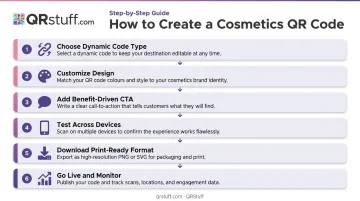
- Choose a dynamic QR code type — URL, Video, PDF, or GS1 Digital Link depending on your destination content
- Customize the design — apply brand colors, embed your logo, select module and corner shapes to match packaging aesthetics
- Add a benefit-driven CTA adjacent to the code (outside the quiet zone)
- Test across devices — use both iPhone and Android native cameras, test at actual print size, in different lighting, from different angles
- Download in print-ready format — SVG or EPS for professional print, high-res PNG (300 DPI minimum) for smaller formats
- Go live and monitor — update destination URLs at any time through the dashboard without reprinting
For beauty brands with large product catalogs, QRStuff's bulk generator lets you upload a spreadsheet of URLs or product codes and generate unique QR codes for each SKU simultaneously — essential for seasonal collections or serialized loyalty codes.
Analytics: What You Can Measure
Once live, dynamic QR codes in QRStuff provide real-time scan data including:
- Scan volume and unique users — see which SKUs drive the most engagement versus one-time curiosity scans
- Device type (iOS vs. Android) — informs how you optimize landing pages for each audience
- Country and city-level location data — identify which retail regions are most active for regional campaigns
- Daily and weekly scan trends — spot peak engagement windows to time content updates or promotions
This data tells beauty brands which SKUs drive the most engagement, which retail regions are most active, and whether destination content is performing well enough to warrant an update — all without touching the physical packaging.
For enterprise-scale beauty operations, QRStuff offers tiered plans to match catalog size and complexity. The Full Suite covers 250 dynamic codes with unlimited scans, advanced analytics, batch processing up to 500 codes, and full design customization.
The Enterprise plan scales to 1,000+ codes and adds GS1 Digital Link support, Digital Product Passport capability, SSO, white-label options, and a dedicated account manager. Current pricing is available at qrstuff.com, with options suited to brands managing single markets or global product lines.
Frequently Asked Questions
Which luxury cosmetics brands use QR codes for customer engagement?
L'Oréal links La Roche-Posay and Kérastase codes to ingredient sourcing and hair diagnostics content. ISDIN uses serialized loyalty QR codes per unit, while Clinique and Charlotte Tilbury offer AI skin analysis and virtual try-on via scan. Shiseido's Ulé has piloted Digital Product Passports.
What should a QR code on cosmetics packaging link to?
The destination should solve a specific shopper problem. Strong use cases include ingredient transparency pages, AR try-on tools, loyalty program sign-ups, discount offers, and post-purchase guides like recycling or refill reminders. Redirecting to a generic homepage wastes the scan.
Are QR codes on cosmetics packaging required by law?
Not universally — no cosmetics-specific mandate exists as of mid-2026. The EU's ESPR Regulation (2024/1781) establishes a Digital Product Passport framework where QR codes are the practical implementation. GS1 Sunrise 2027 makes adoption necessary for retail compliance, even if it isn't a strict legal requirement yet.
What is the difference between a static and a dynamic QR code for cosmetics?
Static codes encode a fixed URL with no tracking — once printed, they cannot be changed. Dynamic codes use a short redirect, letting brands update the destination URL at any time without reprinting and providing real-time scan analytics. For cosmetics packaging, where campaigns change and regulations evolve, dynamic codes let you stay current without a single reprint.
How do I make a QR code that fits my beauty brand's aesthetic?
Use a platform that supports logo embedding, brand colour application (including gradients), and custom module and corner shapes. Always test the styled code across multiple devices and lighting conditions before sending to print — high customisation with insufficient colour contrast is the most common cause of scan failure.
Can QR codes help with ingredient transparency on cosmetics?
Yes. A QR code can link to detailed ingredient breakdowns, allergen flags, cruelty-free or vegan certifications, and full sourcing details that cannot fit on physical packaging. That makes them a practical tool for clean beauty brands and any brand preparing for Digital Product Passport compliance.