Introduction
Picture a paramedic arriving at an unresponsive patient's home. On the patient's wrist is a medical ID bracelet with a QR code. One scan reveals known allergies, current medications, and an emergency contact — all within seconds, without a single phone call or paper file.
That scenario is already happening, and it illustrates something broader: healthcare has spent decades digitizing clinical records, yet the physical-to-digital gap at the point of care still slows decisions when seconds matter. QR codes have become one of the most practical tools for closing that gap.
According to the CDC, roughly 1 in 5 new prescriptions are never filled, and among those that are, about 50% are taken incorrectly — contributing to an estimated 125,000 deaths and up to $300 billion in avoidable US healthcare costs annually. Better access to clear medication information is one piece of that puzzle.
This guide covers what medical QR codes are, where they deliver real value, how to deploy them safely, and what compliance requirements healthcare organisations must understand before going live.
Key Takeaways
- QR codes give patients, staff, and first responders instant, contactless access to health-related information.
- Key use cases include patient intake, medication instructions, patient education, emergency alerts, and staff operations.
- Dynamic QR codes are essential in healthcare: medical content changes, and reprinting is costly and error-prone.
- Never embed Protected Health Information (PHI) directly in a QR code; always link to a secure, compliant platform.
- For healthcare deployments, choose a generator with GDPR/SOC2 compliance, password protection, and scan analytics.
What Is a Medical QR Code?
A medical QR code is a scannable code deployed in a healthcare setting to give patients, staff, or first responders immediate access to health-related content — without paperwork, separate logins, or printed handouts. Any smartphone camera can read it.
Static vs. Dynamic: Why the Distinction Matters in Healthcare
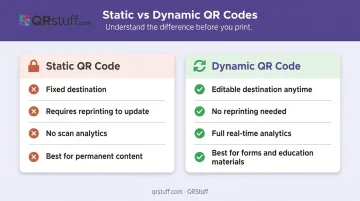
| Feature | Static QR Code | Dynamic QR Code |
|---|---|---|
| Destination | Fixed at creation | Editable at any time |
| Reprinting needed to update | Yes | No |
| Scan analytics | None | Full real-time data |
| Best for | Permanent, unchanging content | Forms, portals, education materials |
In healthcare, almost every content type changes over time — intake forms get updated, drug interaction guides are revised, facility maps shift after renovations. Static codes become liabilities the moment their destination changes. Dynamic codes eliminate that risk.
Keep Patient Data Off the Code Itself
A QR code is an access point, not a storage container. The information it links to should live on a secure platform with appropriate access controls — not embedded in the code itself. Embedding patient data directly into a QR code without authentication means anyone who scans it can read it, with no audit trail and no way to revoke access.
Key Use Cases: How QR Codes Enable Access to Medical Information
Patient Intake and Registration
QR codes placed in waiting rooms, on appointment confirmation emails, or at check-in kiosks can link patients directly to digital intake forms. The form is completed before the patient reaches the front desk, reducing congestion and eliminating paper handling.
The practical advantage of dynamic codes here is significant: when your intake form template changes — and it will — you update the destination in the platform dashboard. The physical code on the waiting room poster stays exactly as it is.
KLAS Research's 2024 Patient Intake Management report confirmed that patients' top priority for engagement technology is the ability to schedule appointments and check in online. QR codes that route directly into those workflows align with where patient expectations already are.
Medication and Prescription Information
As the CDC reports, about 50% of filled prescriptions are taken incorrectly, and the annual burden of nonadherence reaches an estimated $100–$300 billion in avoidable US healthcare costs. A QR code on a prescription label or medication packaging can link patients to:
- Plain-language dosage instructions
- Side effect explanations
- Drug interaction warnings
- Refill request options
This doesn't replace clinical counseling, but it gives patients a point of reference they can return to — on their phone, at any time, in any language if the destination is localized.
Patient Education Materials
Static brochures in exam rooms have a practical shelf life. Clinical guidelines should be reassessed for validity approximately every three years, meaning printed materials frequently become outdated. A QR code on discharge paperwork or in a waiting area can link to:
- Condition-specific care guides
- Post-operative instruction videos
- Wellness resources tailored to the patient's diagnosis
A 2024 peer-reviewed study of inguinal hernia patients found that pre-hospital e-education delivered via QR code was associated with reduced hospital stay and improved patient experience. That's a direct, measurable clinical outcome from a relatively simple digital delivery method.
Emergency and Medical Alert Information
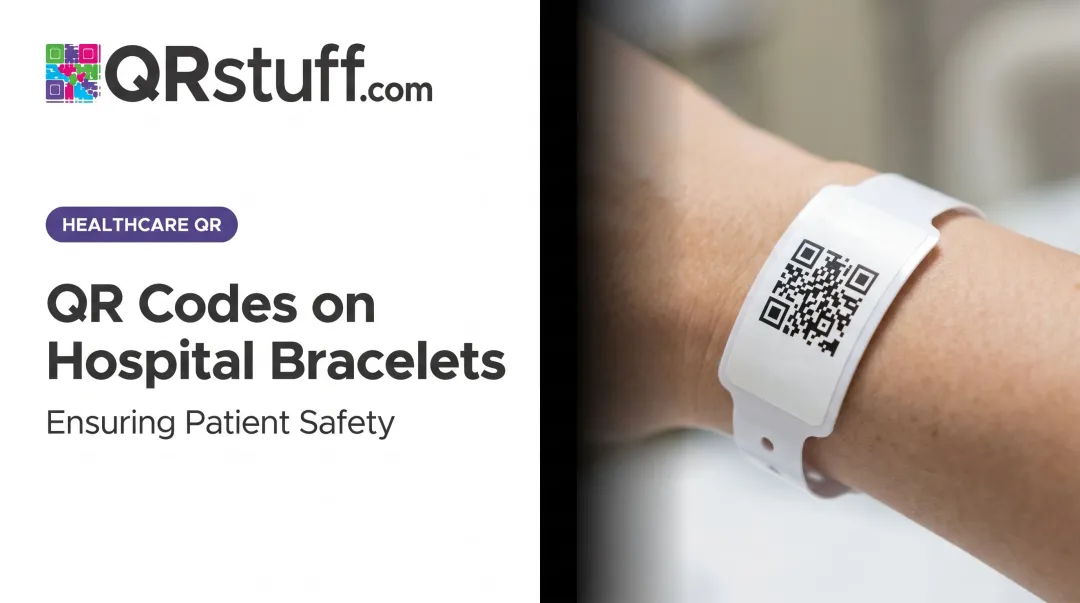
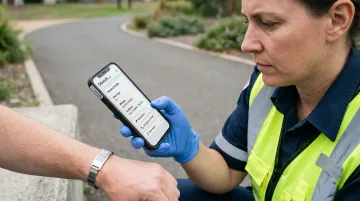
Medical ID bracelets, phone case cards, and wearable tags with QR codes allow first responders to scan and immediately access:
- Emergency contacts
- Known allergies
- Blood type
- Current medications
MedicAlert Foundation's QR medical ID programme is a real-world example of this in practice. Limit the content to what a first responder needs in the first 60 seconds. They are a supplementary access tool, not a replacement for standard emergency assessment protocols.
Internal and Operational Uses
Staff-facing QR deployments carry lower compliance risk and make a practical starting point for healthcare organisations new to QR codes:
- Equipment maintenance logs linked to devices via QR labels
- Access to the latest procedure manuals and clinical protocols
- Facility wayfinding maps for multi-building campuses
- Scan-based check-in systems for shift management
Because these use cases typically don't involve PHI, they sidestep HIPAA complexity while still building staff familiarity with QR-based workflows.
Security, Compliance, and What Not to Put in a Medical QR Code
PHI vs. Non-PHI Use Cases
Not every healthcare QR code triggers HIPAA compliance requirements. The distinction depends on whether the linked content involves Protected Health Information.
Non-PHI uses (lower compliance burden):
- General health education
- Facility wayfinding
- Anonymous satisfaction surveys
- Equipment maintenance logs
PHI-adjacent uses (HIPAA applies to the destination platform):
- Patient intake forms that collect names or insurance details
- Appointment portals with patient-specific records
- Any form that ties health information to an identifiable individual
HHS defines PHI as individually identifiable health information held or transmitted in any form — and their de-identification guidance explicitly lists web URLs and IP addresses among the 18 identifiers to remove. Avoid patient-identifying tokens or identifiers embedded in QR code destination URLs.
HIPAA Compliance Lives at the Destination, Not the Code
A QR code itself is neither HIPAA compliant nor non-compliant. Compliance is determined entirely by the platform the code links to. If that destination collects or stores PHI, it must meet HIPAA standards — and a Business Associate Agreement (BAA) is required from any third-party vendor that creates, receives, maintains, or transmits PHI on a covered entity's behalf.
What not to include in a QR code without proper access controls:
- Patient names or dates of birth
- Diagnoses or treatment details
- Medication specifics tied to an individual
- Insurance or billing identifiers
Secure the Access Layer
Password-protected QR codes add a meaningful security layer for sensitive content — the passcode gate activates before the linked content displays. QRStuff offers password-protected QR codes on its Full Suite and Enterprise plans, with GDPR and SOC2 compliance built in — a practical fit for healthcare organizations that need to secure linked content without adding friction for authorized users.
For any QR-linked healthcare page, review third-party scripts and tracking pixels. HHS has specifically stated that unapproved tracking technologies on healthcare pages can constitute impermissible PHI disclosure — and the 2022 OCR breach report cited a tracking-technology incident affecting approximately 3 million individuals.
Data Minimization for Emergency Codes
The same compliance logic applies to public-facing emergency codes — and here, less is deliberately more. Share only what is immediately actionable. Blood type, allergies, and emergency contact cover the genuine first-responder need. Detailed clinical history belongs inside a HIPAA-compliant system, accessible through authenticated channels.
How to Create a Medical QR Code
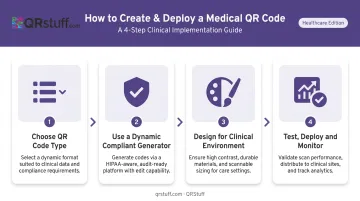
Step 1 — Choose the right QR code type
Match the content type to the delivery format:
- URL QR code — patient portals, intake forms, telehealth links, appointment booking
- PDF QR code — downloadable discharge instructions, medication guides
- vCard — healthcare provider contact information
- Plain text — simple static information such as ward numbers or basic emergency contact details
Note: for vCard and certain other types, QRStuff stores the encoded content on its servers. Healthcare organizations need to include this in their data handling assessment before deployment.
Step 2 — Use a dynamic, compliant QR code generator
Dynamic codes allow destination updates without reprinting, which is non-negotiable for patient-facing healthcare content. QRStuff supports dynamic codes across its Lite Suite, Full Suite, and Enterprise plans. Real-time scan analytics, GDPR compliance, SOC2 compliance, and password protection are available on Full Suite and above — backed by a 99.9% uptime guarantee that healthcare deployments depend on.
For organisations with large-scale needs, bulk generation is available on the Full Suite (up to 500 codes per batch) and Enterprise tiers (unlimited), with API access on Enterprise for programmatic code creation and monitoring.
Step 3 — Design for the clinical environment
- Keep the code high-contrast: dark code on a light background
- Minimum size: 2cm × 2cm for simple URL codes; larger for scanning at seated distance
- Add a clear CTA label: "Scan for Discharge Instructions" or "Scan to Check In"
- Avoid placing codes on reflective or curved surfaces
- Test under fluorescent lighting — hospital lighting conditions affect scan reliability
QRStuff's free plan includes custom colour and logo options, so branded, clinic-appropriate designs don't require an immediate upgrade.
Step 4 — Test, deploy, and monitor
Once the design is ready, move through these steps before going live:
- Scan-test on multiple devices (iOS and Android) before any patient-facing deployment
- Place codes in high-traffic, visible locations — eye level, near relevant touchpoints
- Monitor scan analytics in the dashboard to identify underperforming placements
- Update linked content through the platform as needed — the physical code never changes
Best Practices for Healthcare QR Code Deployment
Getting QR codes into a clinical environment is straightforward. Getting them to work reliably — and safely — requires a few non-negotiable habits:
- Always use dynamic codes for patient-facing content. An outdated intake form is a friction point. An outdated post-operative care instruction is a clinical risk. Dynamic codes let you update destinations without reprinting anything.
- Test size and placement before you laminate. A waiting room poster needs an adequate quiet zone (the white space border) and enough print size to scan from a seated distance. Print a draft, sit down, and scan it.
- Label every code with its purpose. "Scan for medication information" builds trust immediately. An unlabelled code creates hesitation — and in a clinical setting, suspicion is a real barrier to use.
- Keep non-PHI and PHI workflows separate. General wayfinding and education codes can be deployed broadly. Any workflow involving identifiable patient information needs an authenticated, HIPAA-compliant destination with access controls in place.
These practices don't require a large IT team or a complex rollout — they're decisions made at the planning stage that prevent problems down the line.
Frequently Asked Questions
What is a medical QR code?
A medical QR code is a scannable code used in healthcare settings to give patients, staff, or emergency responders instant access to health-related information — such as intake forms, medication instructions, educational materials, or emergency contacts — by scanning with any smartphone camera.
Is there a 100% free medical QR code generator?
Free generators typically produce static codes that can't be updated, may display third-party ads on linked pages, and lack the security or compliance features healthcare requires. For patient-facing or sensitive deployments, a paid platform with HIPAA-ready infrastructure is the right call.
What information should a medical QR code contain?
QR codes should link to information, not store it directly. Appropriate links include intake forms, medication instructions, educational resources, or emergency contact pages. Patient-identifying information should never be embedded in a QR code without proper authentication controls protecting the destination.
Are QR codes in healthcare HIPAA compliant?
The QR code itself is not inherently HIPAA compliant or non-compliant — compliance depends entirely on the platform the code links to. If that destination handles PHI, it must meet HIPAA standards and the vendor must have a Business Associate Agreement in place.
What is a dynamic QR code and why does it matter in healthcare?
A dynamic QR code lets you change its linked destination at any time without reprinting the physical code. In healthcare, where intake forms and patient education materials are revised regularly, this flexibility keeps patients from landing on outdated or broken content.