Introduction
QR codes have moved well past the restaurant menu phase. Today, global brands are using them to run product drops, launch AR try-on experiences, build loyalty ecosystems, and turn passive packaging into active campaign touchpoints.
The scale is hard to ignore. According to eMarketer, 83.4 million US smartphone users scanned a QR code in 2022 — a number forecast to reach 99.5 million by 2025. That's not a niche behavior anymore.
The problem most marketers face is knowing what to do with that opportunity. Campaigns from Coca-Cola or KitKat look impressive, but it's rarely obvious what mechanics actually drove the results — or how a brand without a nine-figure budget runs something similar.
This post breaks down nine of the best QR code marketing campaigns: what they did, why it worked, and exactly how you can replicate each one.
Key Takeaways
- QR codes work when they bridge a physical moment to a digital experience worth having — not just a link dump
- Dynamic QR codes are the campaign standard — they track scans and let you update destinations without reprinting
- Top campaign types include packaging gamification, out-of-home activations, loyalty integration, and AR try-on
- Each campaign below includes a replication framework any business can adapt
- The call-to-action around the code matters as much as the destination behind it
What Makes a QR Code Marketing Campaign Successful?
A QR code is only as good as the experience it opens. Successful campaigns treat the code as an engagement trigger: the moment a physical interaction becomes a digital one. Campaigns that fall flat almost always treat it as nothing more than a URL shortcut.
Every strong QR campaign shares three structural elements:
- Placement context — where the customer will be when they scan, and whether that environment makes scanning feel natural
- A compelling reason to scan — communicated directly next to the code ("Scan for 20% off," "Scan to try it on")
- A mobile-optimized destination — one that delivers on the promise within seconds of scanning
The destination matters more than most marketers expect. Research from Google and Deloitte found that moving from a 1-second to a 3-second mobile load time raises bounce probability by 32%. A slow landing page actively undermines the campaign before the customer even reads a word.
Why Dynamic QR Codes Are the Campaign Standard
Static QR codes encode a URL permanently. Once printed, the destination can't change and there's no scan data. For one-off use, they're fine. For campaigns, they're a liability.
Dynamic QR codes work differently. The code itself contains a short redirect URL — the actual destination lives in a dashboard that you control. In practice, that means:
- Update the destination after printing — swap a holiday promo for a January campaign without reprinting packaging
- Every scan logs data: total scans, unique scans, device type, location, time of day
- Connect scan data to Google Analytics via UTM parameters for full-funnel attribution
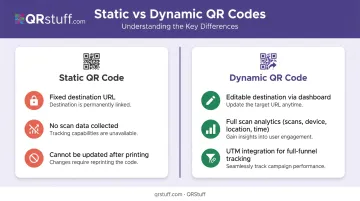
QRStuff's dynamic codes support all three capabilities, with built-in integrations for Google Analytics, Meta Pixel, and Google Ads across paid tiers.
9 Best QR Code Marketing Campaigns & How to Replicate Them
These campaigns span food and beverage, beauty, retail, and entertainment — but each follows the same logic: use a physical moment to spark a digital interaction.
Coca-Cola: QR Codes on Packaging for Exclusive Digital Content
What they did: For the Coca-Cola Y3000 Zero Sugar launch in 2023, on-pack QR codes sent consumers to the Coca-Cola Creations Hub, where an AI camera applied futuristic filters to their photos. The 2025 "Share a Coke" relaunch used similar mechanics — QR codes on packaging linked to a digital hub for personalised bottles and Memory Maker video content, rolled out across 120+ countries.
In both cases, the packaging became an entry point to a branded digital experience. Holding the bottle was the trigger.
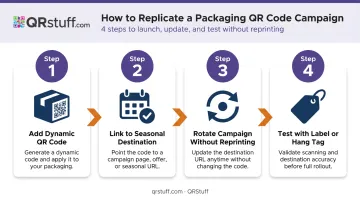
How to replicate:
- Add a dynamic QR code to your product packaging or label
- Link it to a seasonal destination: a contest in December, a product story page in January, a user-generated content hub in summer
- Because the code is dynamic, the destination rotates with your campaigns — no reprinting required
- Even a small-run label update or hang tag works for this model
McDonald's × Frank's RedHot: OOH Drop Culture Campaign
What they did: In early 2024, McDonald's ran a cryptic OOH campaign across the UK and Ireland for the McSpicy Frank's RedHot Chicken Burger. Billboards and posters gave away nothing — except a QR code. Scanning it delivered a top-secret passcode to a dedicated drop site where fans could claim early-access tasting boxes before the burger went on wider sale February 7.
The FOMO mechanism was the campaign. The QR code was the gate.
How to replicate:
- Place QR codes on OOH materials (posters, transit ads, window displays, event banners)
- The code leads to a timed landing page — an early-access offer, a limited drop, a members-only preview
- Use countdown timers or limited-quantity messaging on the destination to reinforce urgency
- Works for product launches, event previews, or flash sales without requiring a major media budget
KitKat × Candy Crush: Gamification via Packaging QR Codes
What they did: From mid-2024 through mid-2025, KitKat ran verified QR packaging campaigns across the Middle East, North Africa, and Malaysia. Shoppers scanned a QR code on participating KitKat packaging, completed a registration step, and received one hour of free unlimited lives in Candy Crush — redeemable weekly, up to 24 times.
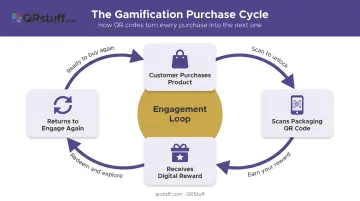
The mechanic created a purchase loop: scan the pack, earn the reward, return to play, repeat. Each step reinforced the next.
How to replicate:
No Candy Crush partnership required. The underlying model works at any scale:
- Partner with a digital platform relevant to your audience (a game, app, or community)
- Or build a lightweight branded experience: spin-to-win, scratch-card reveal, discount unlock
- Gate the reward behind a packaging scan — the QR code is what triggers the value
- Track redemption rates via dynamic code analytics to measure which SKUs drive the most engagement
IKEA: QR Codes for In-Store Activation and Checkout
What they did: IKEA Canada integrated QR codes directly into the in-store experience. Customers scan a QR code in participating store locations to activate the IKEA app's Shop & Scan tool — allowing them to scan items as they shop. At checkout, a unique QR code lets them pay and skip the queue entirely.
QR codes here aren't a campaign add-on — they're baked into the shopping journey as a permanent utility layer.
How to replicate:
Retailers don't need IKEA's footprint to apply this model:
- Place QR codes on shelf tags or product displays linking to detailed specs, sizing guides, or customer reviews
- Add a QR code at the point of sale linking to a mobile checkout or loyalty sign-up
- For brands with 3D models or AR capability, QR codes on tags are the on-ramp to that experience — no custom app required (QRStuff supports a dedicated AR data type that opens Web AR directly in the browser)
Starbucks: QR Codes Powering a Loyalty Ecosystem
What they did: Starbucks built QR-based scanning into the core of its Rewards program. The app's Scan tab allows members to view balances, redeem rewards, and pay — all through a single in-app code shown at the counter. With 33.8 million active US Rewards members reported in Q4 FY2024, the loyalty flywheel runs largely on scan interactions.
The real takeaway: a scan became the central mechanic for the entire loyalty experience, not a feature bolted on top of it.
How to replicate:
- Add a dynamic QR code to receipts, table cards, or product packaging linking directly to your rewards or points page
- The code should skip the homepage and land customers exactly where they can act — on their account, on a redemption offer, on a referral page
- Update the destination when reward tiers or promotions change, without touching the printed material
L'Oréal: AR Beauty Try-On via Packaging QR Codes
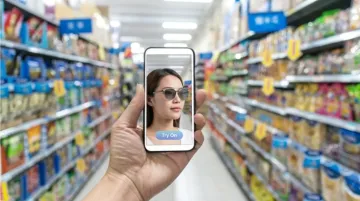
What they did: In 2024, L'Oréal Paris placed QR codes on Féria hair dye boxes in Walmart stores nationwide. Scanning the code opened a Snapchat AR experience where shoppers could virtually try on 15 hair colour shades using their phone camera — at the shelf, before buying.
The placement was deliberate: on the box, at the moment of purchase decision.
How to replicate:
- Beauty, eyewear, apparel, and home décor brands can link packaging or shelf QR codes to virtual try-on or 3D product viewers
- The AR experience doesn't require custom development — platforms like Snapchat, Web AR tools, or existing 3D viewers can be linked via a standard URL QR code
- The critical design principle: the code must appear at the decision point, not on a receipt or after checkout
- QRStuff supports an AR data type that opens Web AR directly in the browser, no app download needed
Spotify Codes: Music Discovery Through Physical Placements
What they did: Spotify created a proprietary scannable code format — Spotify Codes — that links any song, album, playlist, or artist profile to a physical touchpoint. Artists like Nina Nesbitt put them on stickers, Tigercub printed them on beer mats, and Wilco ran a scavenger hunt using them at Solid Sound Festival.
Note: Spotify Codes are a proprietary format scanned within the Spotify app, not standard QR codes — but the underlying model is directly replicable with standard QR codes.
How to replicate:
- Generate a standard QR code linking to any audio experience: a curated playlist, a podcast episode, a brand audio identity, or a content hub
- Place it anywhere your audience has a moment of downtime and curiosity — café menus, product packaging, event programmes, gym equipment, waiting rooms
- The context doing the creative work: a playlist QR code on a gym membership card lands differently than the same code on a magazine ad
Batiste × Barry's: Context-First OOH QR Placement
What they did: In 2022, Batiste partnered with Barry's fitness brand for a month-long campaign spanning 47 Barry's studios across Philadelphia, Los Angeles, New York, and Chicago — placing the dry shampoo brand directly where post-workout hair care was most relevant.
Note: QR code placement was not confirmed in the verified press sources for this campaign. The strategy is referenced here as a model for context-first placement.
How to replicate: The principle is sound regardless of QR confirmation: place your code where the need is highest.
- Map where your target customer is at the moment they need your product
- Negotiate a QR code placement with a complementary business: a gym, salon, café, co-working space, or hotel
- Create a separate dynamic code for each location so scan data tells you which placements perform — QRStuff's campaign tagging makes this straightforward without managing dozens of separate links
Common Mistakes to Avoid in QR Code Marketing
Most QR campaign failures come down to three avoidable errors:
No call-to-action near the code. A bare QR code gives people no reason to scan. Every code needs a one-line prompt: "Scan for 20% off," "Scan to see it in your room," "Scan to enter." Without it, few people will.
Using static QR codes for campaigns. Static codes can't be updated after printing and provide no analytics. If the destination changes mid-campaign or the URL breaks, the code is dead and there's no way to know how many scans you lost. Dynamic codes solve both problems.
A destination that doesn't deliver. The strongest hook in the world fails if the landing page loads slowly or doesn't match what the code promised. Google and Deloitte's research shows a 0.1-second improvement in mobile load time correlates with an 8.4% increase in retail conversion rates. Nail both, and the scan converts. Miss either one, and even a well-placed code with a strong CTA will underperform.
Conclusion
Every campaign in this list — from Coca-Cola's packaging to McDonald's drop culture to L'Oréal's AR try-on — runs on the same mechanics: a well-placed code, a compelling reason to scan, and a destination that earns the interaction. None of those elements require a global brand budget. They require good placement thinking, a clear offer, and a dynamic QR code with analytics.
Those three ingredients are exactly what QRStuff is built around. The platform supports 40+ QR code types, dynamic codes with real-time scan tracking, custom branded designs, and integrations with Google Analytics and Meta Pixel. The Free Suite lets you start immediately, no commitment required.
Frequently Asked Questions
How are QR codes used in marketing?
QR codes connect physical materials — packaging, signage, print ads, receipts — to digital experiences including landing pages, videos, loyalty programs, exclusive offers, and AR experiences. Dynamic QR codes add scan-level analytics, so marketers can measure exactly which placements drive engagement.
What makes a QR code campaign successful?
Three things: placement in a high-context moment where scanning feels natural, a clear reason to scan displayed next to the code, and a mobile-optimized destination that delivers on the promise within seconds.
What type of QR code is best for marketing campaigns?
Dynamic QR codes are the standard for any campaign use. They allow the destination URL to be updated without reprinting materials, and they provide scan analytics — total scans, unique scans, device type, location, and time — that static QR codes cannot.
How do I track the performance of a QR code campaign?
Dynamic QR code platforms provide a dashboard with total and unique scans, device type, geographic location, and time of scan. Add UTM parameters to your destination URL so Google Analytics connects scan traffic directly to conversions and campaign ROI.
Can small businesses run QR code marketing campaigns?
Yes. Most strategies covered here are accessible to businesses of any size. The key is matching the QR code type to your campaign goal and ensuring the destination experience is polished before launch.
What should I put behind a marketing QR code?
The destination should match the promise made near the code — a discount, exclusive content, a product demo, or a personalized experience. Generic homepages and unoptimized pages are the most common reason campaigns underperform after the scan.