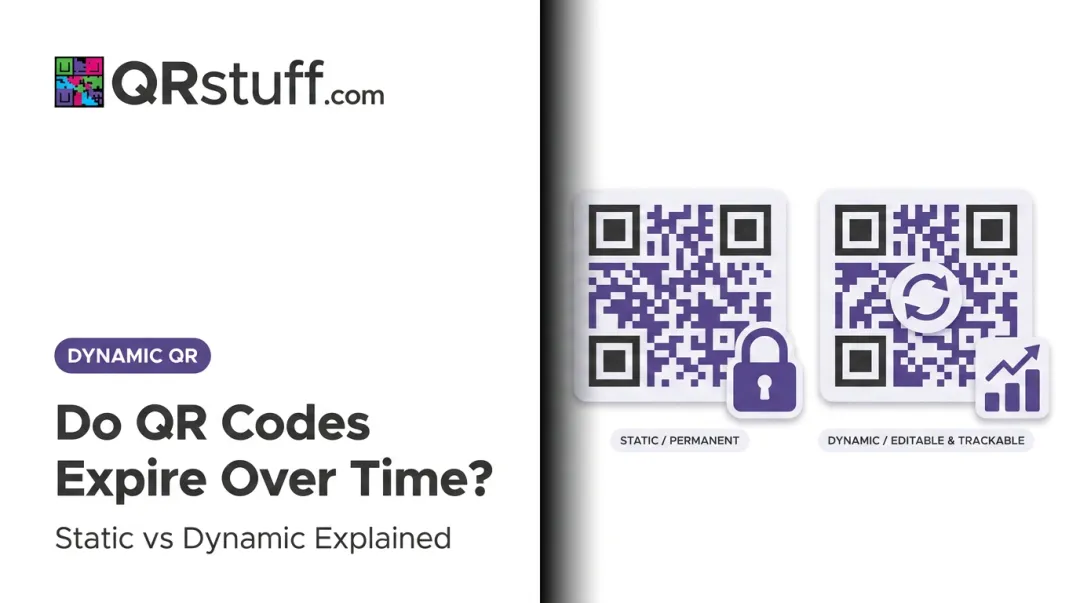
This is the real cost of choosing the wrong QR code type. Static and dynamic QR codes look identical on paper, but they work in fundamentally different ways. Static codes lock your destination data permanently into the pattern at creation. Dynamic codes store a short redirect URL, letting you change where the code points — and track every scan — without touching the printed image.
This article breaks down both types side by side, explains how each works in practice, and gives you a clear framework for deciding which one fits your situation.
Key Takeaways
- Static QR codes permanently encode data — no edits, no tracking, ever
- Dynamic QR codes use a redirect URL, enabling destination changes and real-time analytics
- Static works for permanent, one-time content; dynamic is built for campaigns, menus, and anything subject to change
- Dynamic codes require a paid subscription — but avoiding a single reprint usually covers it
- For businesses managing QR codes at scale, dynamic is the smarter long-term investment
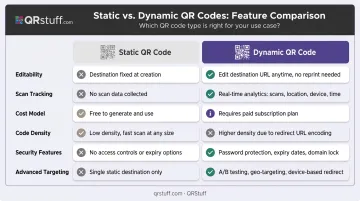
Static vs Dynamic QR Codes: Quick Comparison
Here's how the two code types stack up across the features that matter most for real-world use.
| Feature | Static QR Code | Dynamic QR Code |
|---|---|---|
| Editability | Fixed at creation | Destination updated anytime |
| Scan Tracking | No data captured | Tracks scans, devices, location, and time |
| Cost Model | Free to generate; reprinting required for changes | Paid subscription; eliminates reprint costs |
| Code Density | Encodes full data — denser, slower to scan small | Encodes short URL — cleaner, faster to scan |
| Security Features | None | Password protection, expiration, geo-targeting |
| Advanced Targeting | Not available | Device-based redirects, geolocation rules |
What Is a Static QR Code?
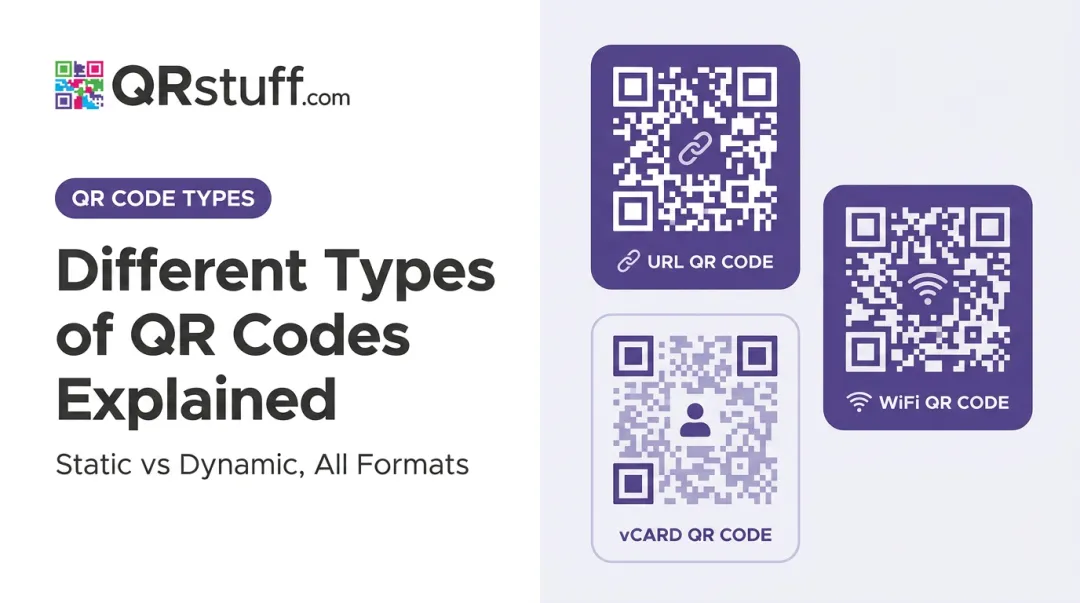
A static QR code encodes all destination data — a URL, phone number, plain text, WiFi credentials, or contact card — directly into the code's pixel matrix at generation. There's no intermediary server. When someone scans it, their device reads the information straight from the pattern itself.
The Real Benefits (and Real Limits)
Where static codes genuinely work well:
- Free to generate with no account required
- No ongoing subscription cost
- Functions without internet access for non-URL types (WiFi, text, phone numbers)
- No scan limits or expiration on codes you've already distributed
The limitation is absolute: once printed, the data is permanent. A typo, an expired offer, a changed URL — any of these makes the printed code useless. With direct mail printing running $0.32 to $0.45 per piece according to USPS benchmarks, reprinting 500 flyers or packaging inserts adds up fast.
Long URLs create a second problem: denser, more complex patterns. According to DENSO Wave's QR capacity documentation, each QR version adds 4 modules per side (grid size ranges from 21×21 up to 177×177). More data means a higher version, a denser pattern, and a greater risk of scan failure at small print sizes.
When Static Makes Sense
Static codes suit content that is genuinely fixed and will never change:
- Business cards linking to a permanent LinkedIn profile
- Museum exhibits pointing to a permanent archive
- Conference badges or warehouse labels in low-connectivity environments
- One-time event flyers where no tracking is needed
- WiFi credentials or serial numbers on product packaging
QRStuff supports free static code generation across all these types — URL, plain text, phone number, WiFi, vCard, SMS, and more — with no account required, no scan limits, and no expiration.
What Is a Dynamic QR Code?
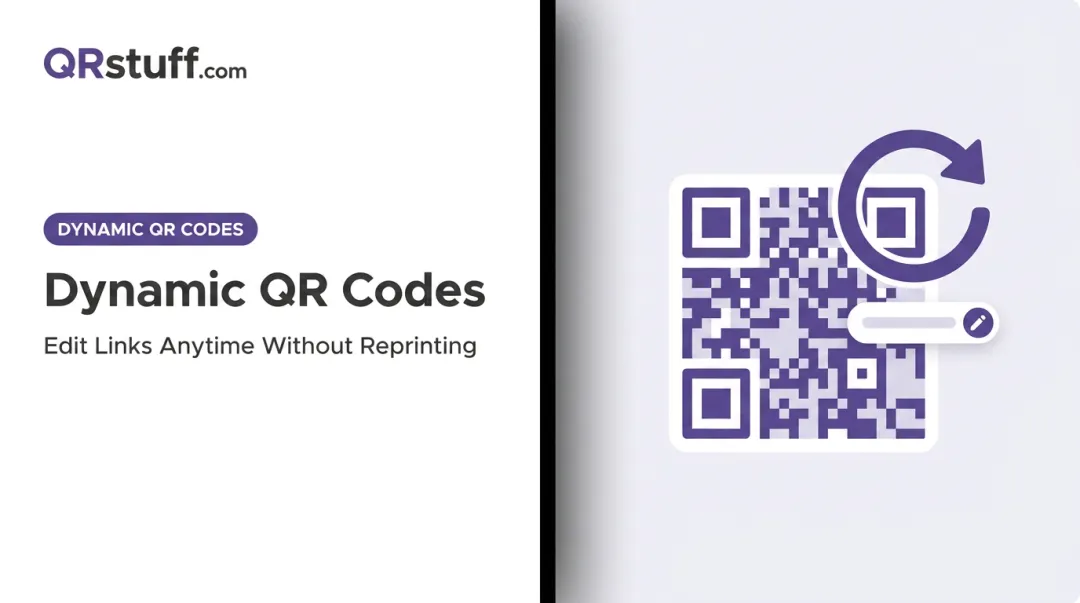
A dynamic QR code encodes a short redirect URL hosted on the QR platform's server rather than the final destination. When scanned, the device resolves that short URL, the server looks up the current destination, and the user is sent there instantly. The printed code never changes — only the server record does.
Editing Without Reprinting
The practical implication is significant. A restaurant updating its menu, a retailer swapping a promotion mid-season, or a marketer redirecting a landing page after a campaign pivot — all of these require a single dashboard update. No reprint, no downtime, no wasted print budget.
QRStuff's dynamic codes work through this mechanism. The destination URL isn't hardcoded into the visual pattern, so updating it through the dashboard takes effect immediately across every printed, distributed, or embedded instance of that code.
Analytics That Actually Matter
Every scan on a dynamic code generates a data point. QRStuff's analytics dashboard captures:
- Total scans and unique scans — distinguishing reach from repeat engagement
- Device type and OS — iOS vs Android, mobile vs desktop
- Geographic location — country and city level
- Scan time and date — identifying peak engagement windows
- Referring website or app — for codes shared digitally
This matters for campaign measurement. According to Chain Store Age's survey data, 45% of marketers rank analytics as the most important QR feature — yet only 12% successfully connect scans to revenue. Dynamic QR codes close that gap by making scan data available from the first deployment.
Advanced Capabilities Beyond Simple Redirects
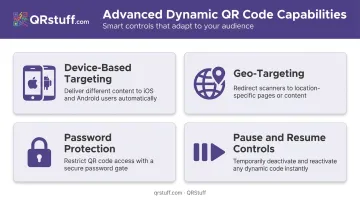
Dynamic codes on platforms like QRStuff support features that static codes structurally cannot:
- Device-based targeting — detect iOS and redirect to the App Store; detect Android and redirect to Google Play
- Geo-targeting — redirect users based on country (available on Full Suite and Enterprise plans)
- Password protection — restrict access to exclusive content or sensitive materials
- Pause/resume controls — deactivate codes for seasonal campaigns without deleting them
Platform Reliability Matters
Dynamic codes depend on the redirect server staying online. QRStuff has maintained 99.968% actual uptime since launching in 2008 — against a guaranteed 99.9% SLA across all paid plans. That reliability extends to data handling: the platform is GDPR and SOC2 compliant, with analytics infrastructure that doesn't store personally identifiable information.
Paid plans (Lite Suite, Full Suite, and Enterprise) carry no QR code expiration as long as the subscription is active. Free-tier dynamic codes expire after 30 days with a 50 scans/month cap, so for any business-critical deployment, a paid plan is the right starting point.
Dynamic QR in Practice: Scale and Enterprise Use
The case for dynamic codes strengthens with volume. Dynamic QR codes now hold 64.92% of the QR market's revenue share according to Mordor Intelligence's 2025 market analysis — a reflection of how businesses running ongoing campaigns or large print runs have voted with their budgets.
Restaurant adoption illustrates the point clearly. National Restaurant Association research shows 57% of limited-service customers would access menus via QR code, and First Watch processed 125,000 QR payments in a single week. For any operation updating prices or seasonal items regularly, a static code becomes a liability the moment anything changes.
For enterprise operations managing codes across thousands of SKUs or locations, QRStuff's bulk generation (up to 500+ codes per batch on Full Suite, unlimited on Enterprise) and API access allow centralized management across the entire operation. Brands including Coca-Cola, Walmart, Marriott, and IKEA use the platform across their operations.
Static vs Dynamic QR Codes: Which Should You Choose?
The decision comes down to two questions: will the destination ever change, and does scan performance matter?
Choose Static When:
- The content is permanently fixed and will genuinely never need updating
- No scan tracking or campaign analytics are required
- The code contains simple offline data — WiFi, plain text, phone numbers
- It's a personal or one-time use case with no business ROI to measure
Choose Dynamic When:
- Linked content is likely to change — menus, promotions, landing pages, product info
- Tracking engagement and measuring campaign ROI matters
- The code will run for months or appear on materials with a long shelf life
- You need advanced features: password protection, geo-targeting, or device redirects
The Cost Calculation
For a one-time event flyer that gets discarded after the weekend, static is fine — no subscription needed.
For a QR code printed on product packaging shipping for the next 12 months, with a promotional URL that will change at least once — dynamic pays for itself after the first avoided reprint. A single avoided reprint run of a few hundred pieces can cover months of subscription cost. See QRStuff's current pricing here.
QRStuff supports 40+ QR code types with real-time scan tracking, geographic and device breakdowns, custom branding, and password-protected codes — used by brands including Coca-Cola, Walmart, and Marriott. Explore QRStuff's plans here.
Frequently Asked Questions
What is the difference between static and dynamic QR codes?
Static QR codes permanently encode the destination data into the pattern at creation — no edits are possible and no scan data is captured. Dynamic codes encode a short redirect URL, so the destination can be updated anytime and every scan generates analytics. For campaigns, printed materials, or anything that might change, dynamic codes are the practical choice.
Do I need a dynamic QR code?
Yes, if the linked content might change, tracking scan performance matters, or the code will be printed at scale. Static codes suit only truly permanent, one-time content with no tracking requirement — fixed WiFi credentials or a permanent archive link, for example.
Is my QR code static or dynamic?
Check the dashboard of the platform you used to create it. Dynamic codes will show scan data and an editable destination URL. Static codes show no tracking information. If you generated the code for free without creating an account, it's almost certainly static.
Can I convert a static QR code to a dynamic one?
No. The data is permanently embedded in the pattern with no conversion path. To get dynamic functionality, create a new dynamic code and reprint your materials — which is why starting with dynamic makes sense for anything with long-term use.
Do dynamic QR codes expire?
It depends on the plan. Free-tier dynamic codes on QRStuff expire after 30 days with a 50 scans/month limit. On all paid plans — Lite Suite, Full Suite, and Enterprise — codes remain active indefinitely as long as the subscription is maintained.
Are dynamic QR codes more expensive than static ones?
Static codes are free; dynamic codes require a paid subscription. But the real comparison includes reprint costs. QRStuff's Lite Suite starts at £4/month — and a single avoided reprint run of packaging or large-format materials typically exceeds that many times over.