That model no longer matches how people shop. According to PwC's 2023 Global Consumer Insights survey, 4 in 10 consumers use their phones in store aisles to research products, and 36% compare prices while standing in front of an item. The package isn't the final word anymore — it's the starting point.
QR codes close that gap. They turn a printed surface into a live, updatable digital channel. Yet most conversations about packaging QR codes stay surface-level, focusing on the novelty rather than the business mechanics. This article covers both: the highest-impact use cases and the concrete operational benefits brands see when they execute packaging QR codes strategically.
Key Takeaways
- QR codes transform static packaging into a trackable, two-way brand touchpoint
- Top use cases: product transparency, brand storytelling, loyalty enrollment, and sustainability communication
- Dynamic QR codes let brands update linked content after printing with no reprints required
- Scan analytics give brands visibility into post-purchase behavior that traditional packaging never provided
- Every scan is a direct signal of buyer intent — one that feeds back into smarter product and marketing decisions
What Are QR Codes on Product Packaging?
A QR code on packaging is a scannable code that connects a physical product to a digital experience — a webpage, video, form, or offer — instantly accessible via any smartphone camera.
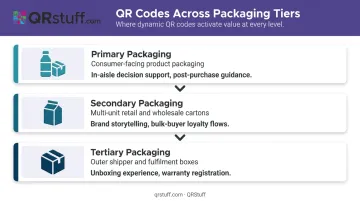
They operate at three distinct levels, each serving a different purpose:
| Packaging Level | Examples | Strategic Purpose |
|---|---|---|
| Primary | The product itself (bottle, box, label) | In-aisle decision support, post-purchase guidance |
| Secondary | Outer carton, retail shelf wrap | Brand storytelling, bulk-buyer loyalty flows |
| Tertiary | Shipping boxes, fulfillment materials | Unboxing experience, warranty registration |
Physical packaging has a fixed information capacity — there's only so much you can print. A QR code removes that constraint entirely. Instead of crowding a label with fine print, brands can link directly to ingredient details, tutorials, certifications, and promotions, all without changing the packaging itself.
Top Use Cases for QR Codes on Product Packaging
Product Information and Transparency
Physical packaging space runs out fast. Full ingredient lists, allergen information, third-party certifications, multilingual instructions, and sourcing details simply don't fit, and regulators are asking for more, not less.
A QR code solves this by directing consumers to a rich, updatable digital destination. In food, cosmetics, and health products, this typically means a product page covering origin, certifications, and usage guidance. The purchase-intent data here is compelling: GS1 US reports that 79% of shoppers are more likely to purchase products with a scannable barcode or QR code that provides the information they want. NielsenIQ found that 64% of shoppers would switch brands for more detailed product information beyond basic nutrition facts.
Platforms like QRStuff support GS1 Digital Link QR codes that carry GTIN, batch, expiry, and serial data simultaneously. The same code that scans at checkout delivers ingredient and allergen detail to curious consumers in the aisle.
Brand Storytelling and Customer Engagement
Text copy on packaging can tell someone what a product is. Video and interactive content can show them why it exists, and that distinction matters for craft, mission-driven, or premium brands competing on identity rather than price.
A packaging QR code can unlock:
- Founder story videos
- Origin and sourcing documentaries
- How-to tutorials and application guides
- Augmented reality experiences
Post-purchase is where this pays off most. A customer who just bought the product is already predisposed toward the brand — they just need a frictionless entry point. A QR code on the inside of a box lid or back of a label costs nothing to add, and creates a brand memory no shelf tag can match.
Loyalty Programs and Repeat Purchase Flows
Packaging reaches customers at a uniquely high-intent moment: they've already purchased. That makes it an ideal, low-friction gateway to loyalty sign-ups and repeat purchase flows. A QR code can connect buyers directly to:
- Loyalty program enrollment
- Rewards point redemption
- Exclusive discount codes
- One-tap reorder flows
The business case for retention is clear. Harvard Business Review, citing Bain & Company research, found that a 5% increase in customer retention can raise profits by 25% to 95%. Forrester reports that loyalty program memberships influence 54% of what US online adults purchase and 64% of where they shop.
A QR code on packaging puts a loyalty enrollment flow directly in the customer's hands at the moment they're most positively disposed toward the brand. No email campaign needed. No separate landing page hunt.
Sustainability Communication and Packaging Reduction
Brands face two converging pressures: consumers demanding environmental transparency, and the operational cost of paper inserts, multilingual manuals, and promotional leaflets.
QR codes address both. Brands can deliver recycling instructions, sustainability certifications, digital product passports, and lifecycle data on demand, replacing physical inserts entirely.
McKinsey's 2025 US consumer research found that 77% of US consumers consider recyclability extremely or very important in packaging sustainability, and 64% say they'd pay more for sustainable packaging.
QRStuff's platform supports digital product passport QR codes specifically designed for brands communicating supply chain transparency and sustainability claims, a use case gaining regulatory urgency in the EU and beyond.
Key Benefits of Adding QR Codes to Your Packaging
Real-Time Customer Engagement with Measurable Insights
Every packaging QR code scan generates data: when it happened, where, on which device, and whether it was a first-time or repeat scan. That's customer behavior at the physical touchpoint — something traditional packaging never captured.
In practice, this means brands can answer questions like:
- Which products drive the most post-purchase engagement?
- Which regions respond to a specific seasonal promotion?
- Is unboxing content actually being consumed?
QRStuff's analytics dashboard tracks scan volume, unique vs. repeat scans, geographic location down to city level, device type (iOS vs. Android), and time-based trends.
Campaign tagging lets brands segment data by product line or SKU — so a brand managing 40 SKUs can see which ones are actively engaging customers and which are effectively invisible.
KPIs directly impacted: scan rate, customer engagement rate, campaign attribution, repeat purchase rate, cost-per-engagement
Limited-time promotions, new product launches, and multi-region campaigns are where this data advantage shows up most clearly.
Packaging Flexibility Without Reprinting Costs
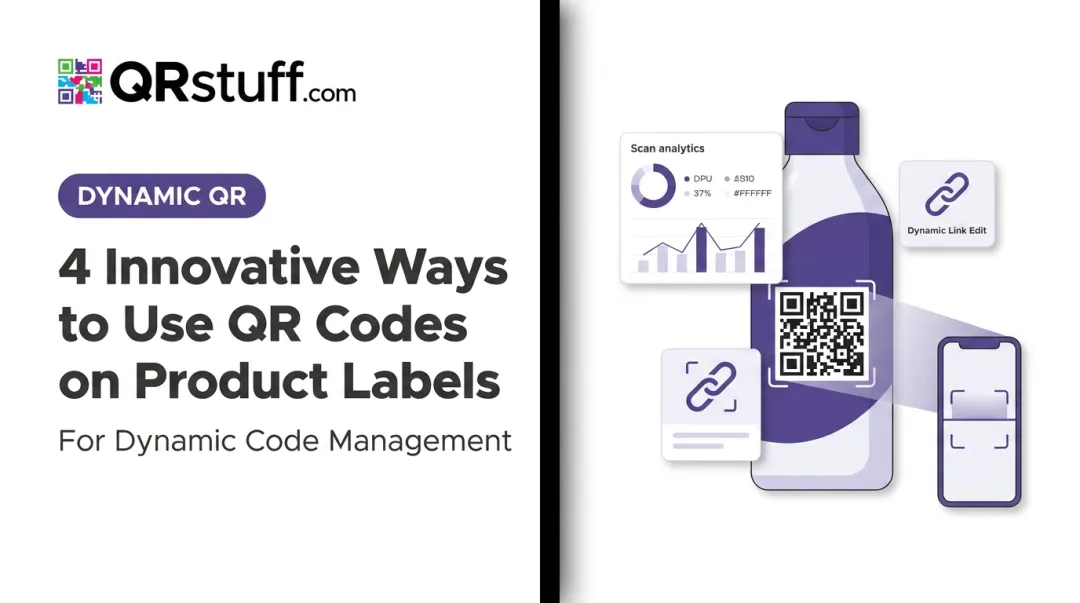
Dynamic QR codes decouple the printed code from the linked destination. The physical mark on the package never changes — but the URL it points to can be updated any time through a dashboard, without touching a single piece of printed material.
How it works in practice: a brand prints one dynamic QR code before a product launch. That code can redirect to:
- A product launch landing page at launch
- A loyalty offer three months in
- Updated usage instructions after a formula change
- A seasonal recipe campaign the following year
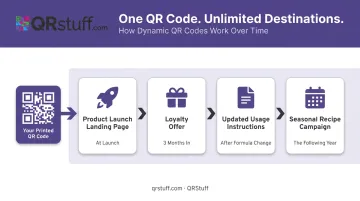
All from the same printed code. QRStuff enables these real-time redirects through its dashboard, with no restrictions on how often destinations can be updated — useful for brands managing both evergreen content and fast-moving promotional cycles.
The risk of skipping this is concrete. Packaging Digest reported that more than 80 FDA food recalls in 2024 were related to packaging errors — label omissions among the most common triggers. Dynamic QR codes don't fix a printed label error, but they do allow a brand to publish corrected or supplementary information immediately, without a full reprint.
KPIs directly impacted: packaging reprint costs, time-to-market for campaign updates, promotional agility
This benefit is most relevant for products with 12–24 month shelf lives, brands running seasonal or regional promotions, and companies in regulated industries where required disclosures evolve.
Stronger Post-Purchase Experience and Reduced Support Costs
A customer opens a product and doesn't know how to use it. What happens next determines whether you get a 5-star review, a return, or a support ticket.
A packaging QR code removes friction at exactly this moment:
- Electronics brands link to setup videos
- Food brands link to recipes and preparation tips
- Cosmetics brands link to application tutorials
- Health product brands link to dosage guidance and FAQs
Zendesk's benchmark data shows that more than 50% of consumers will switch to a competitor after a single bad experience, and 73% will switch after multiple bad ones. A customer who can't figure out how to use what they bought is already partway to both a return and a negative review.
QRStuff supports Video, PDF, and URL QR code types specifically suited to post-purchase guidance — and because these are dynamic, brands can update the linked content (for example, adding a new troubleshooting FAQ) without reprinting anything.
KPIs directly impacted: product return rate, support ticket volume, NPS/CSAT scores, repeat purchase rate
Products with a learning curve, multi-language markets, and review-dependent brands see the strongest results here.
How to Get the Most Value from Packaging QR Codes
A QR code that points to a generic homepage is a missed opportunity. The brands seeing real results from packaging QR codes follow three practical principles:
1. Design for scannability first
- Minimum size: 2cm × 2cm for simple URLs (QRStuff's own recommendation; larger for complex data)
- High contrast: dark code on light background; dots at least 70% darker than the background
- Quiet zone: minimum 4× the width of a single data module, unobstructed
- Placement: flat, non-reflective surfaces; avoid folds, seams, or corners
- File format: SVG or EPS for print production; minimum 300 DPI for raster exports
2. Match the scan experience to the customer's mindset
- At shelf (curiosity) → product ingredients, certifications, sourcing
- At unboxing (excitement) → loyalty offer, brand story, setup video
- During first use → how-to tutorial, FAQ, warranty registration
3. Track and act on scan data Analytics only add value when they feed back into packaging decisions. QRStuff's dashboard makes this actionable, tracking which SKUs drive engagement, which regions respond to specific content, and which CTAs convert — down to city-level geography, device type, and custom time windows.
For brands managing large product catalogs, QRStuff's Enterprise tier includes:
- Unlimited batch processing with GS1 Digital Link compatibility
- API integration with ERP and packaging management systems
- White-label options for agencies running QR programs on behalf of CPG clients
Frequently Asked Questions
How do you use QR codes on packaging?
Create a dynamic QR code, place it prominently on the packaging, and pair it with a clear call-to-action — "Scan for ingredients" or "Scan to register," for example. Use a platform with built-in analytics so you can track scan performance and update the destination without reprinting as campaigns change.
Should I use dynamic or static QR codes on product packaging?
Dynamic codes are almost always the better choice. They allow the linked URL to be updated after printing, which means campaign changes, product info updates, or regulatory corrections don't require a reprint. For any packaging with a shelf life beyond a few weeks, reprinting static codes each time content changes costs more than a dynamic subscription.
What can a QR code on product packaging link to?
Common destinations include:
- Ingredient and allergen pages
- How-to videos and recipes
- Sustainability reports and brand story content
- Loyalty sign-up flows and discount codes
- Warranty registration and support FAQs
The right destination depends on where the customer is in their purchase journey.
What is the minimum size for a QR code on packaging?
2cm × 2cm is the recommended minimum for simple URLs under standard scanning conditions. Leave a clear border of uninterrupted space around the code — cropping it will cause scan failures. For complex data or packaging with challenging surfaces, larger is safer.
Do customers actually scan QR codes on product packaging?
Yes, though rates depend heavily on placement, CTA clarity, and the perceived value of scanning. An MDPI study of food product QR codes found 57% of respondents scanned the code to get specific product information. Codes offering clear, immediate value — a discount, a recipe, setup help — significantly outperform codes pointing to generic destinations.
How do I track who scans my packaging QR code?
QR code platforms with built-in analytics track scan volume, location, device type, and time-based trends. QRStuff's dashboard surfaces this data in real time — down to city level — with unique vs. repeat scan differentiation, so teams can make informed decisions on packaging and campaign updates.